
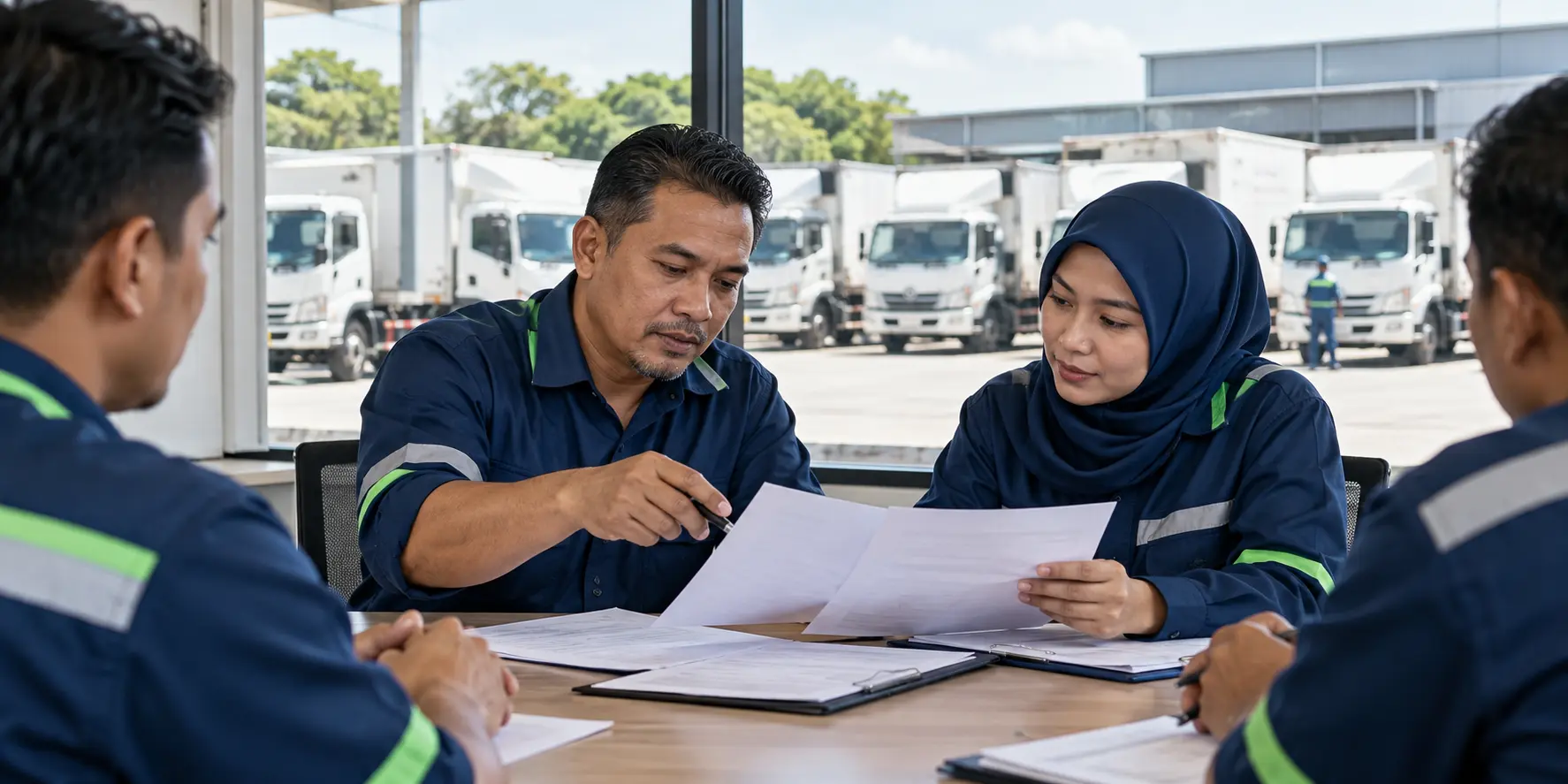
Defensive driving for heavy vehicle drivers means anticipating hazards while working within the limits of the vehicle. A truck or bus needs suitable space, a planned manoeuvre and a driver who understands how visibility, road conditions and the task affect the next decision.
For Malaysian commercial fleets, training should reflect the actual vehicle category and routes. A rigid delivery truck, an articulated vehicle and a passenger coach have different operating characteristics. The following considerations help drivers and supervisors identify what to discuss, practise and review.
The FMCSA’s truck and bus guidance highlights blind spots, stopping space and turning needs. These are general safety principles; US legal provisions and road layouts are not presented as Malaysian requirements.
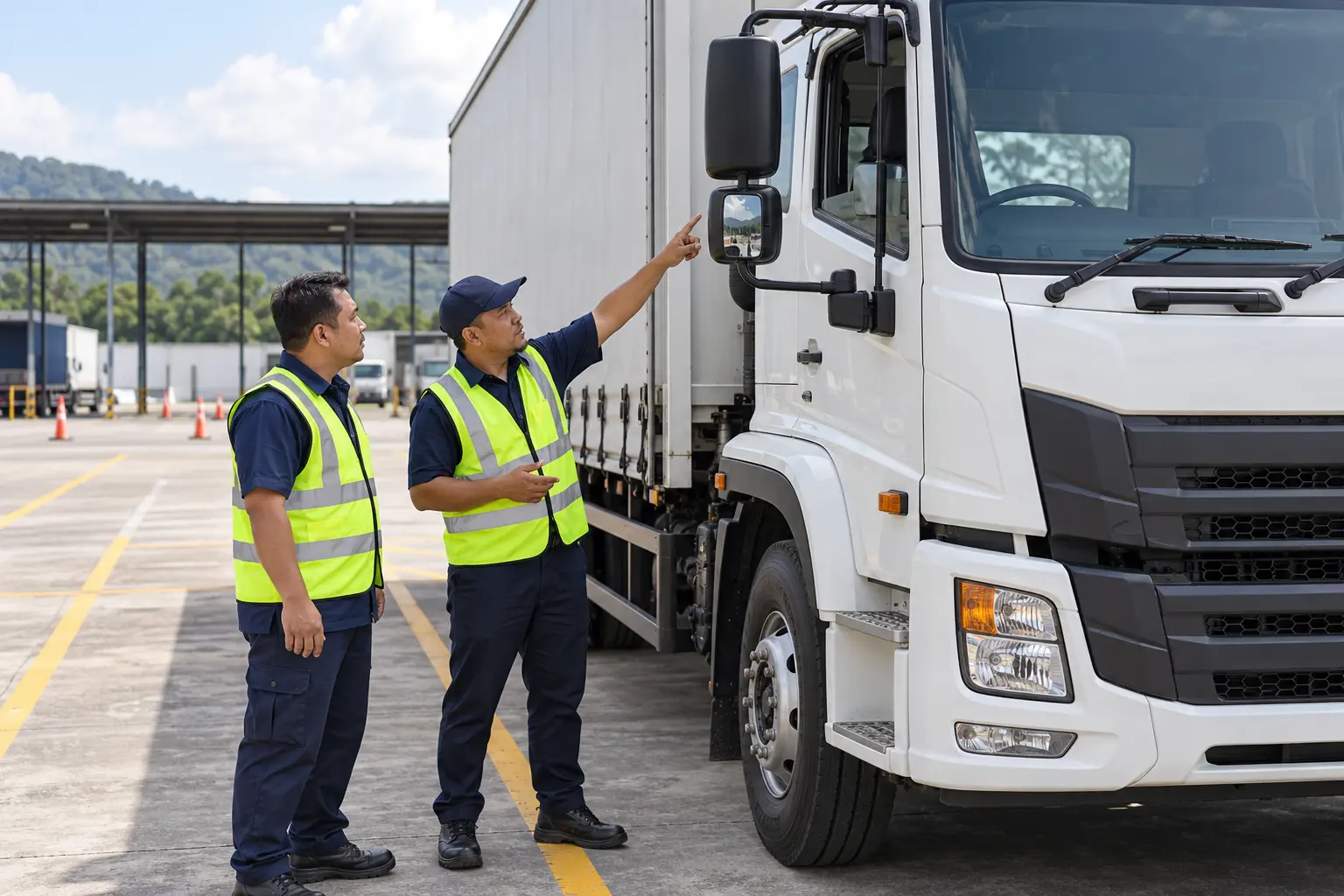
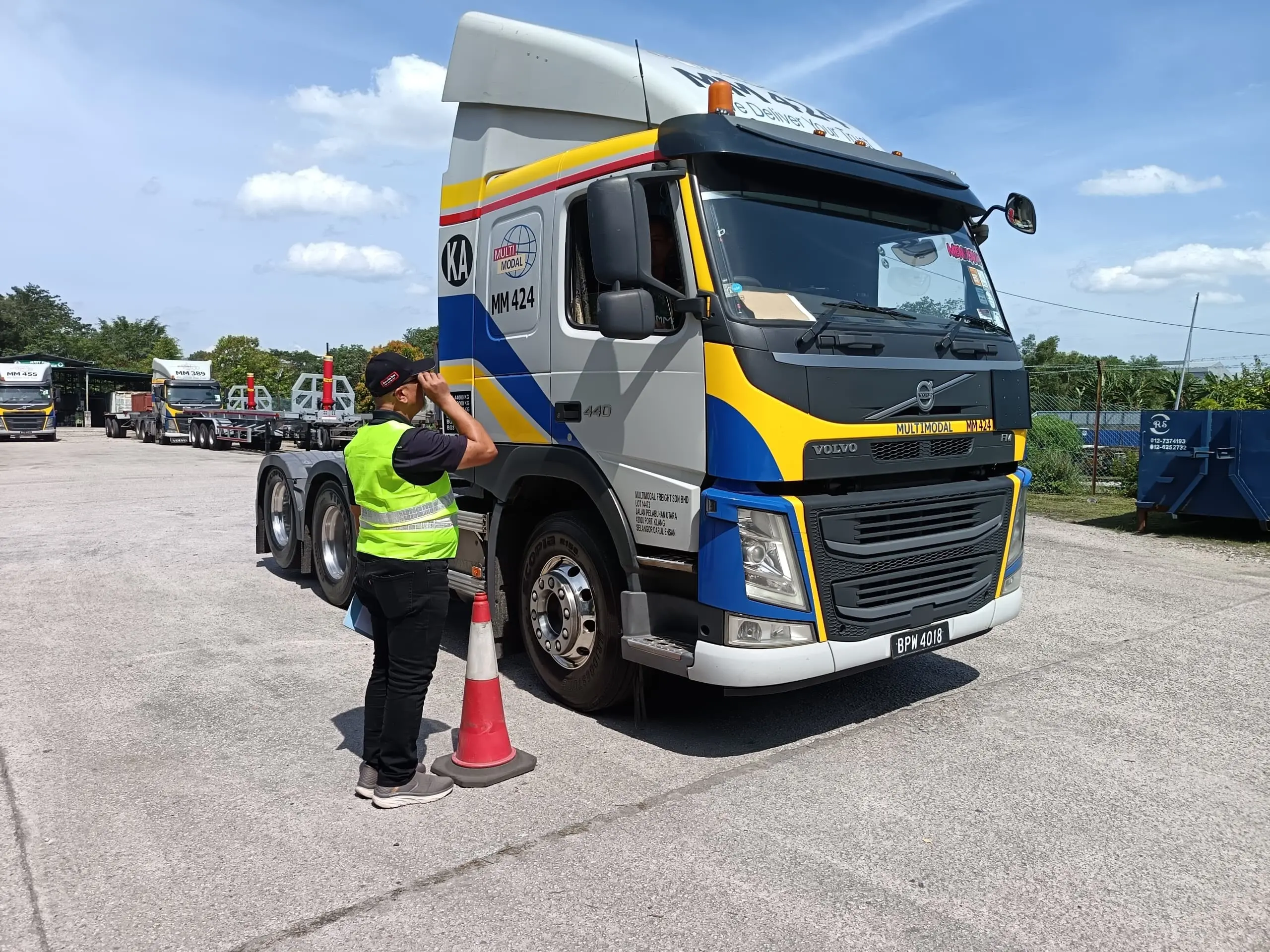
Apply the principles through instruction on the actual vehicle. Drivers need to know its dimensions, controls and visibility limits before starting work, including any change caused by a trailer, load or fitted equipment.
Look far enough ahead to recognise queues, junction activity, roadworks and changing traffic. Leave a following gap that provides time to respond smoothly, using the fleet’s vehicle-specific training and the conditions encountered.
If another vehicle enters the gap, rebuild space gradually where safe. Avoid closing up to discourage other road users from merging.
There is no single stopping-distance figure or following interval in this guide for every truck or bus. Vehicle condition, speed, road surface and operating configuration matter. A posted limit does not establish that the same speed is appropriate in rain or poor visibility.
Training discussion: A queue appears beyond a bend. Ask what earlier observations and speed choices would give the driver more options.
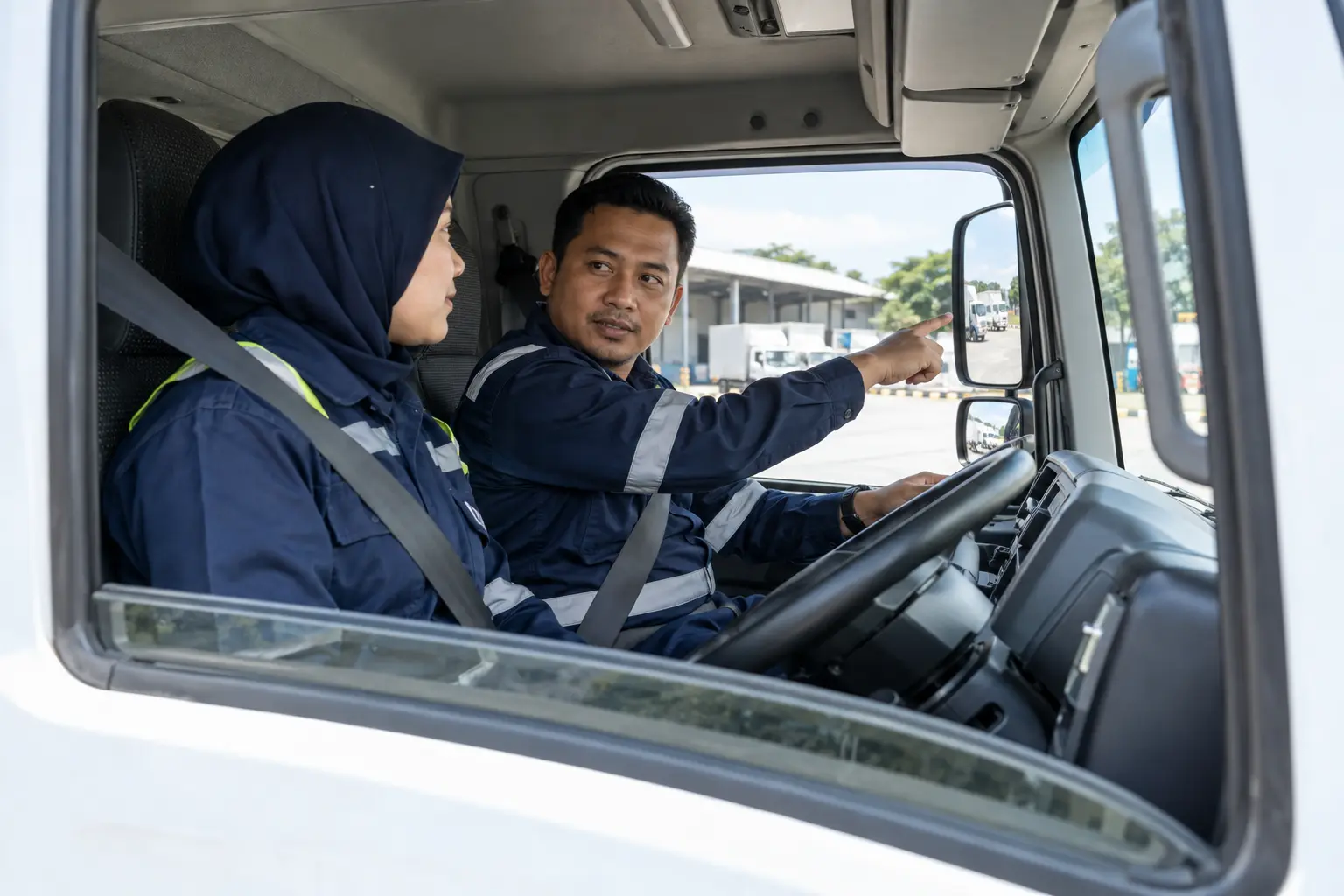
Set mirrors and check fitted cameras while parked. Identify areas that remain difficult to see and practise an observation routine appropriate to the cab and task.
Before a lane change or turn, consider where motorcycles, cyclists or pedestrians may have moved since the last observation. Indicating communicates intention but does not confirm that the space is clear.
Use cameras and assistance systems as part of the routine. Check their condition and understand their limits, particularly where a load or attachment changes the view.
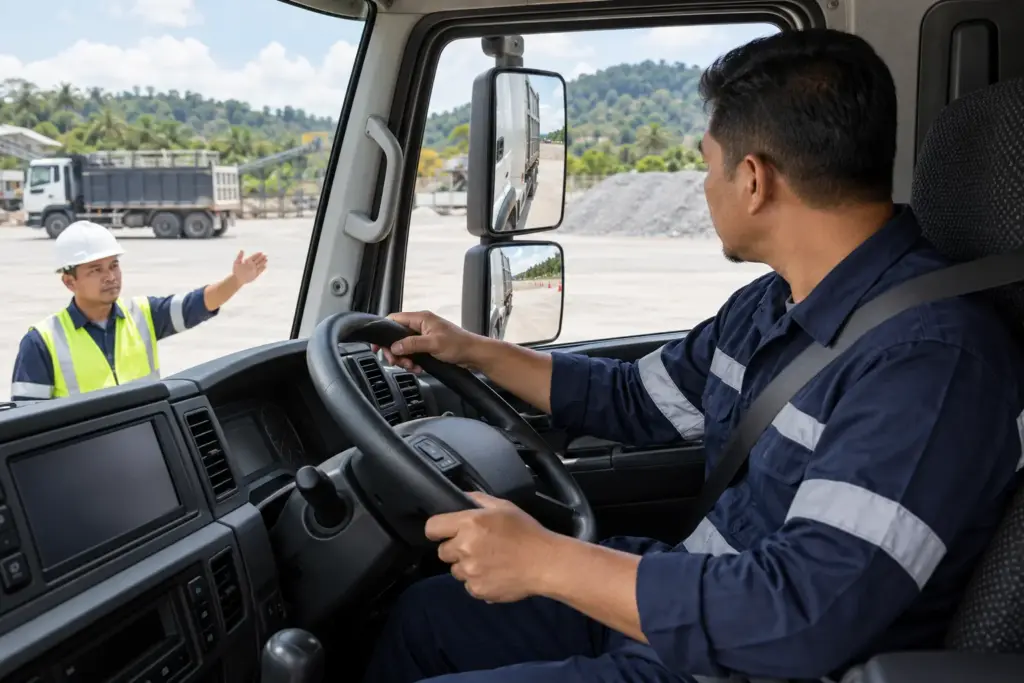
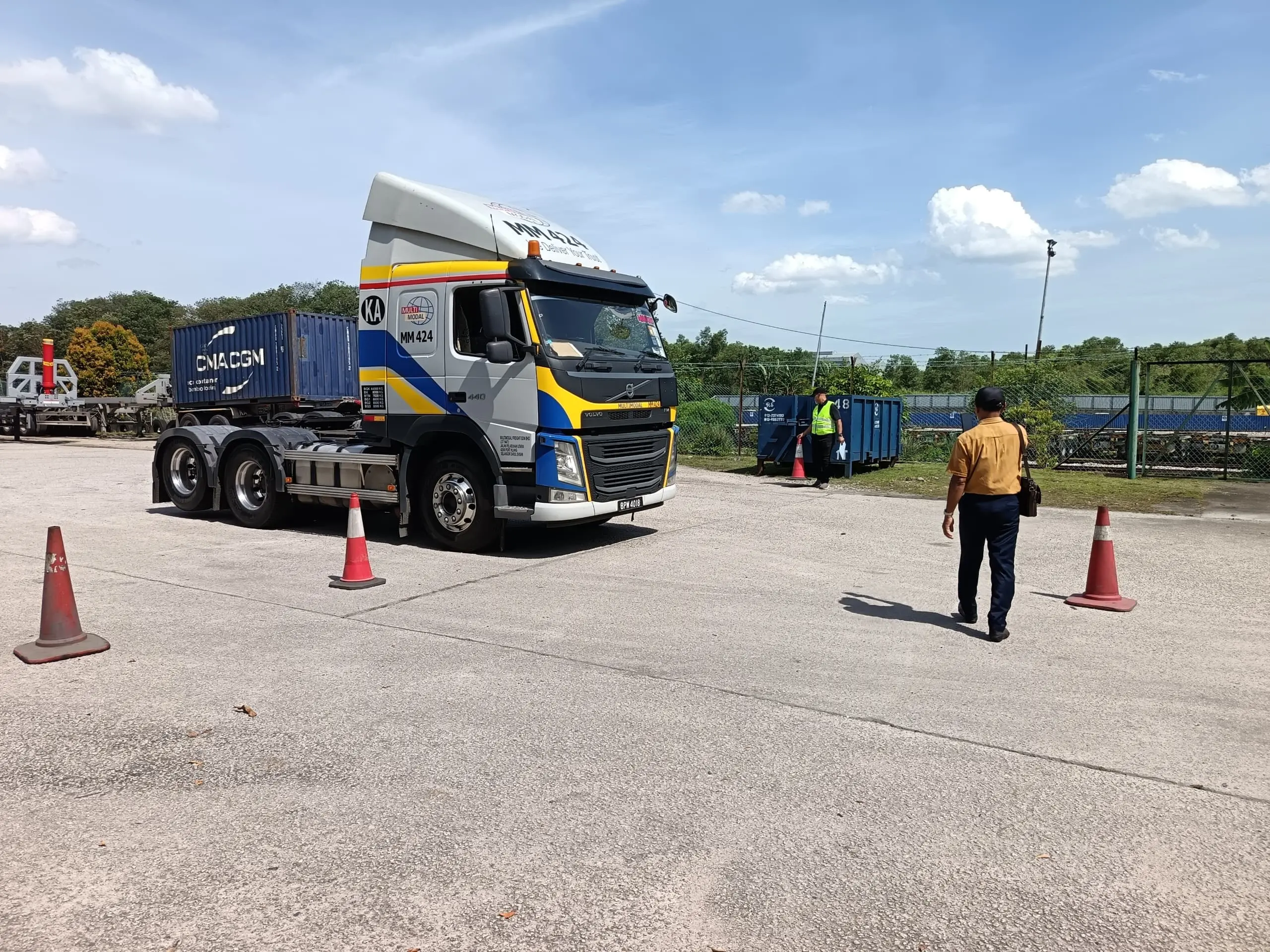
Assess the entrance and available space before committing. Training should explain how rear wheels may follow a different path from the front wheels, and how vehicle overhang or a trailer affects clearance.
At Malaysian junctions and customer premises, check both the intended path and areas alongside the vehicle. Do not assume another road user understands the space required.
Use vehicle-specific instruction to choose a suitable approach and lawful road position. If the entrance is unsuitable or visibility is uncertain, stop safely and arrange assistance or an alternative access plan. Avoid improvising a wide swing into conflicting traffic.
Confirm that the vehicle and its load are suitable for the assignment. Follow approved procedures for load limits, distribution and restraint, and report any concern before departure.
For buses, include luggage security and passenger readiness. For trucks, consider whether the load configuration requires additional instruction or route restrictions.
Approach bends at an appropriate speed before entering and keep control inputs smooth. A speed that felt comfortable on an earlier trip may be unsuitable after a change in load or conditions. If movement of the load is suspected, stop safely and use the reporting procedure.
Plan demanding route sections in advance. Familiarise drivers with the manufacturer’s guidance for gears, braking and any engine-braking or retarder system fitted.
This article does not prescribe a downhill technique for every vehicle. Drivers should receive suitable practical instruction and know which warning signs require stopping and technical assessment.
In rain, low visibility or other difficult conditions, review speed, space and whether the journey can safely continue. Do not enter floodwater of unknown depth or treat a navigation route as proof that a road is passable.
Request suitable parking, unloading or passenger arrangements before arrival. Assess whether the job can be completed with less reversing and without bringing people into the vehicle’s movement area.
Where reversing is needed, use the company’s approved procedure. Check the area from a safe position and agree assistance where necessary. If a trained signaller is used, agree signals and stop if contact is lost. The HSE’s reversing guidance supports reducing reversing and keeping people clear of movement areas.
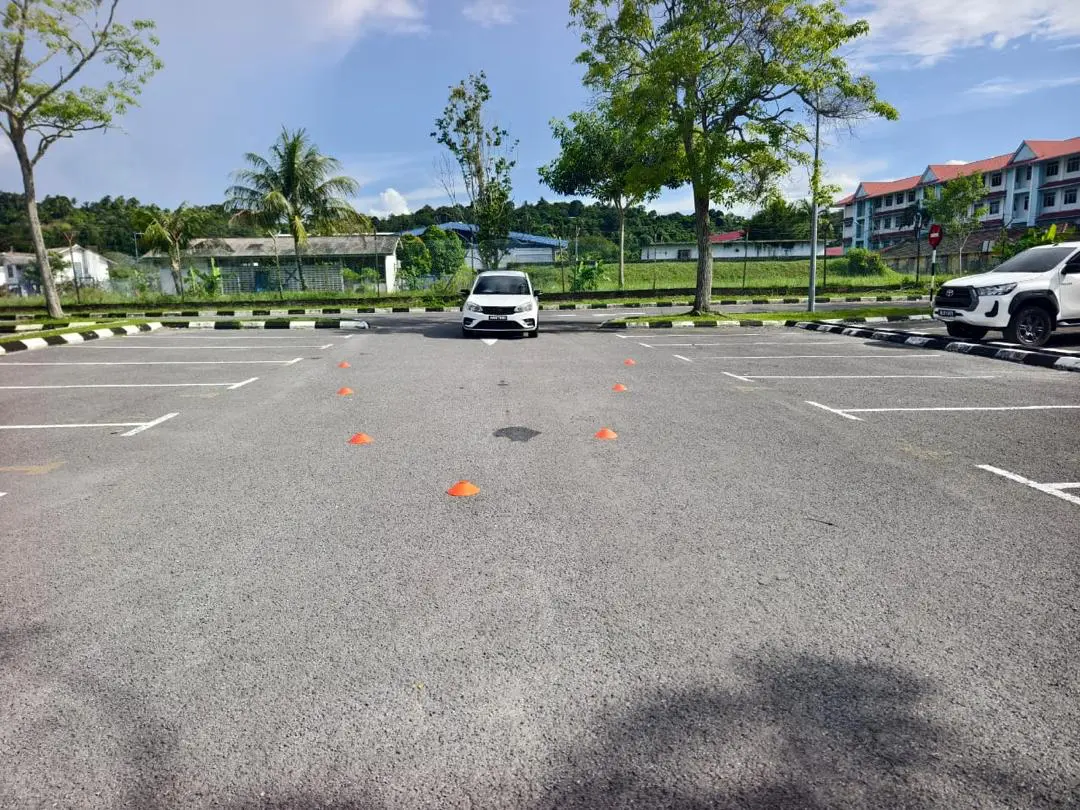
Do not continue a manoeuvre when the view or instructions become uncertain. Reassessing a bay is preferable to committing to a space that cannot safely accommodate the vehicle.
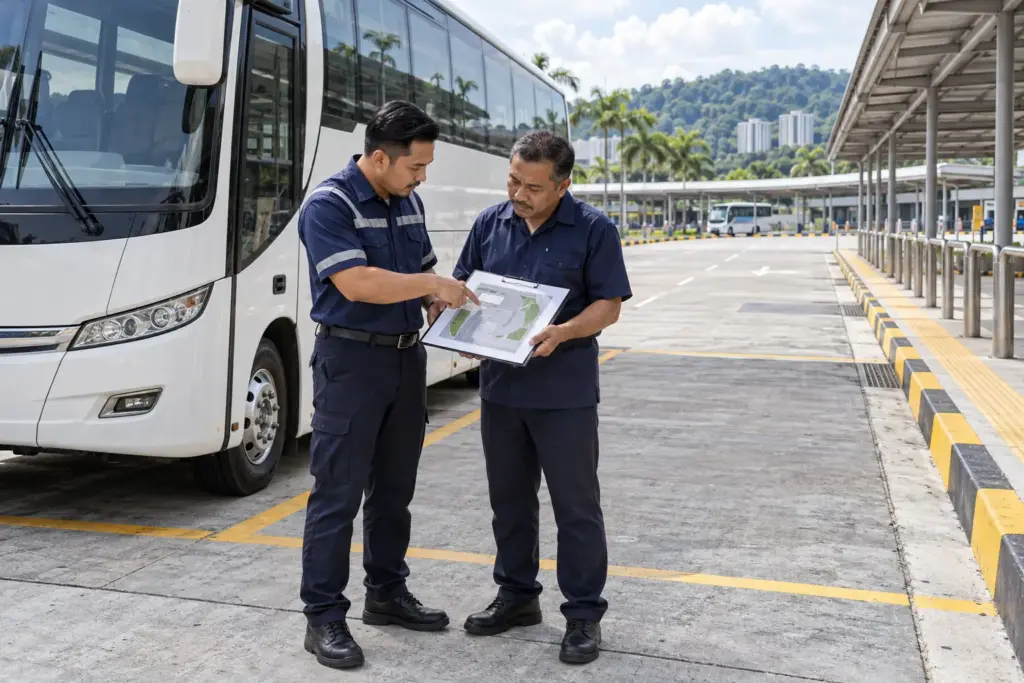
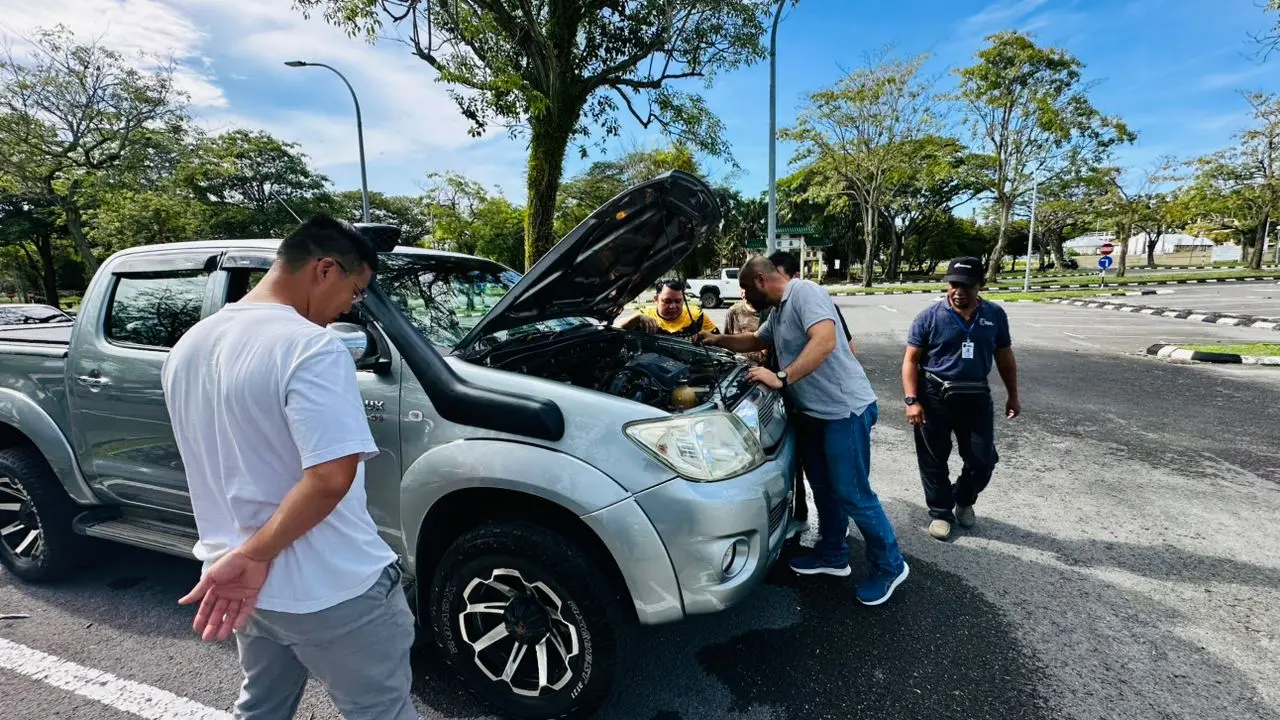
Complete the applicable pre-trip checks and confirm the outcome of previous defect reports. Heavy vehicles, trailers and buses need category-specific checks beyond a general car or van checklist.
Report abnormal warnings, steering, braking or other safety concerns. Do not use a public-road journey to test a suspected serious defect.
Driver readiness also matters. Follow the fleet’s fatigue reporting procedure, organise navigation while parked and communicate delays from a safe stopping place. Drivers need support from dispatch when the planned schedule becomes impractical.
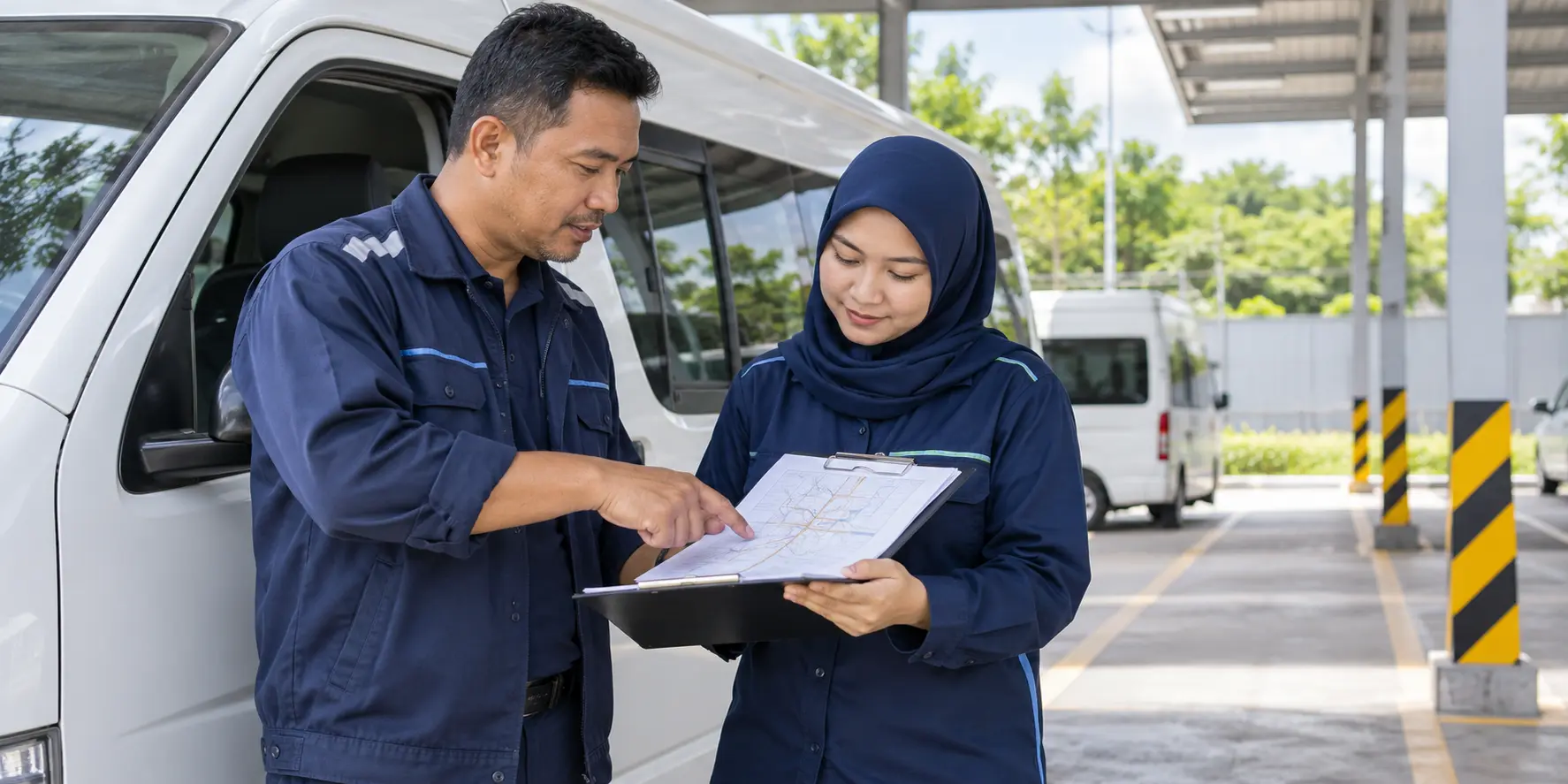
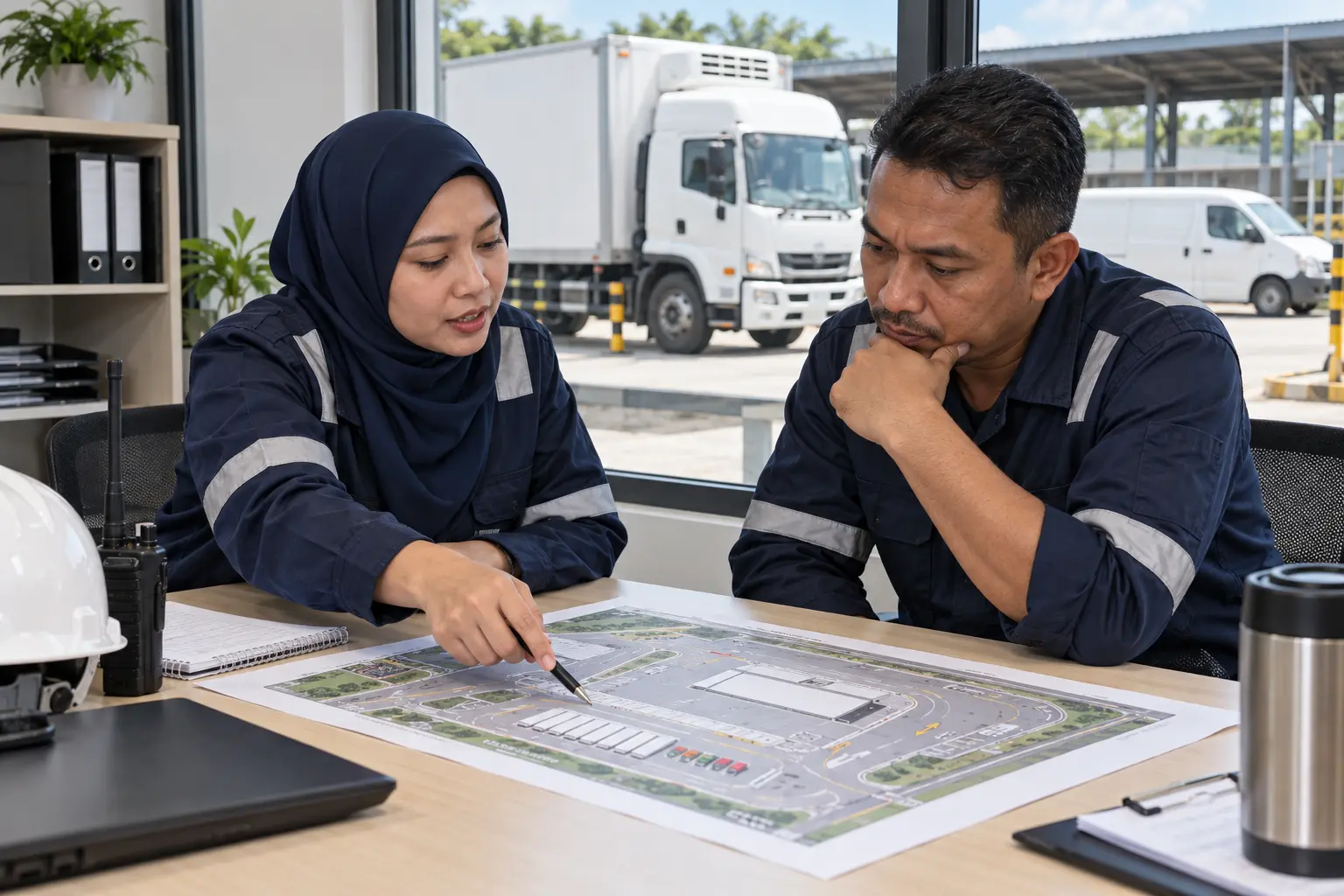
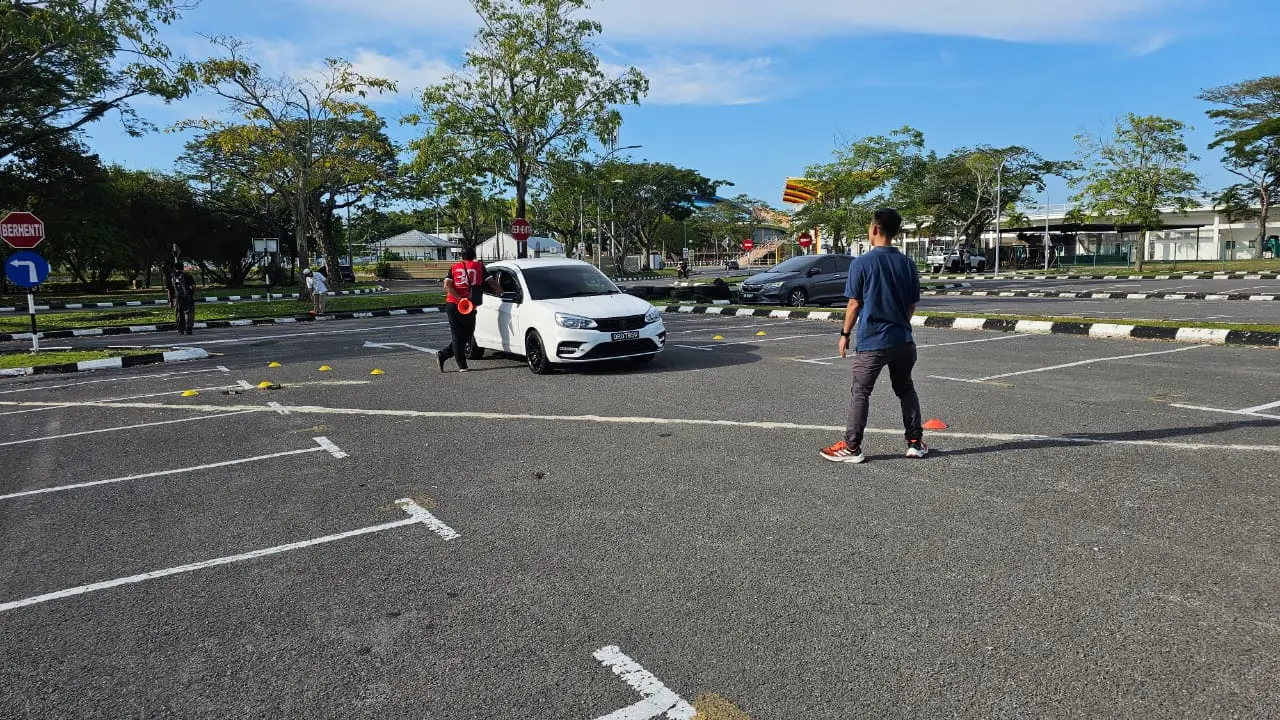
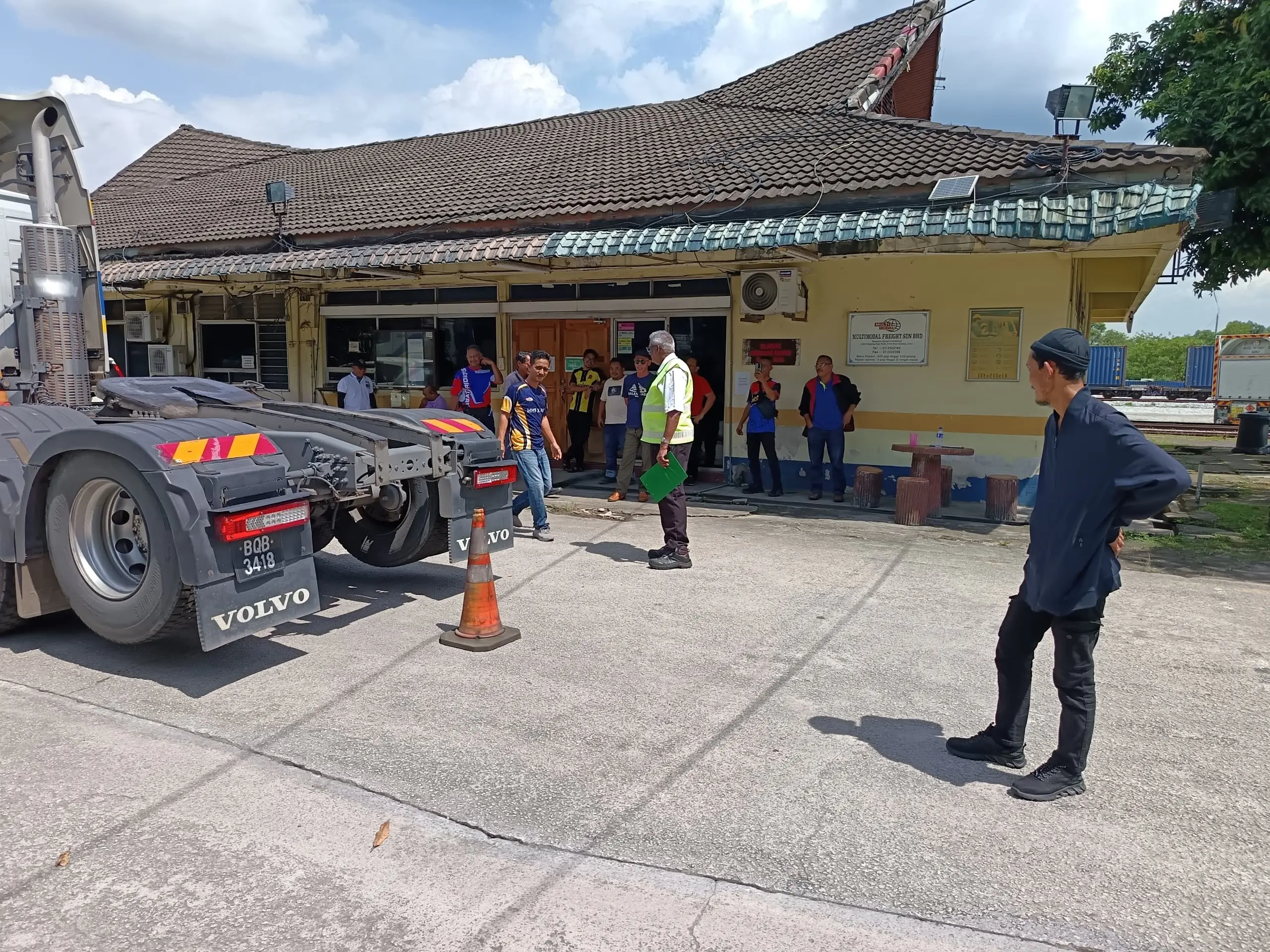
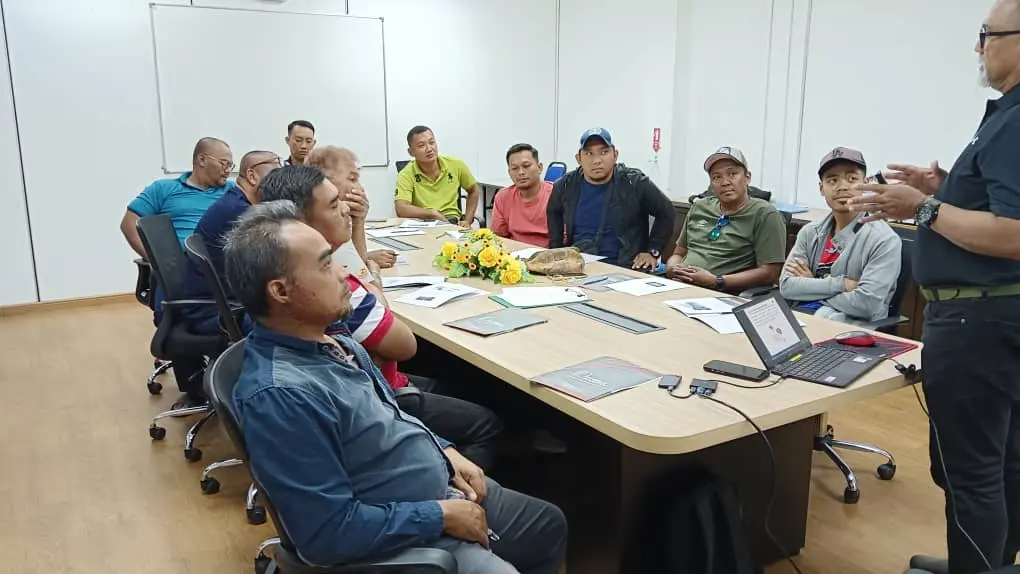
Build scenarios around the routes and vehicles drivers actually use. A practical briefing can compare visibility, discuss a difficult delivery entrance and review how to respond when the available space changes.
| Consideration | Practical learning check |
|---|---|
| Space management | Driver explains how the gap and speed would change with conditions |
| Observation | Driver demonstrates the vehicle’s mirror and camera setup while parked |
| Site access | Driver identifies a suitable approach and when to seek assistance |
| Changing circumstances | Driver and dispatcher explain the reporting and support process |
These are suggested learning checks, not an accredited syllabus or a standard ADHINS course specification. Confirm the proposed programme content and assessment arrangements with the provider.
Review feedback alongside route conditions, schedules and maintenance. A repeated difficulty at one customer entrance may call for an access change as well as driver coaching.
Some defensive driving principles are shared, but vehicle-specific practice is needed for dimensions, visibility, handling and operating systems. Confirm that the programme suits the vehicle category.
No single figure is prescribed here. Use suitable instruction for the vehicle and allow for the road, visibility and operating conditions.
They can improve information, but drivers must understand coverage, condition and remaining visibility limits. They do not remove the need for an observation routine.
No. Training supports safer decisions alongside vehicle condition, journey arrangements and ongoing management. It does not guarantee accident prevention or regulatory compliance.
Contact ADHINS with your vehicle categories, driver roles, operating routes and recurring concerns. Request a proposed defensive driving scope and confirm practical arrangements, vehicle suitability and feedback methods before booking.
Applicable licensing and operating requirements should be checked separately for the service and jurisdiction. This guide provides general training considerations, not legal advice or a replacement for vehicle-specific instruction.





©2026 ADHINS Management Sdn Bhd. All Rights Reserved.