
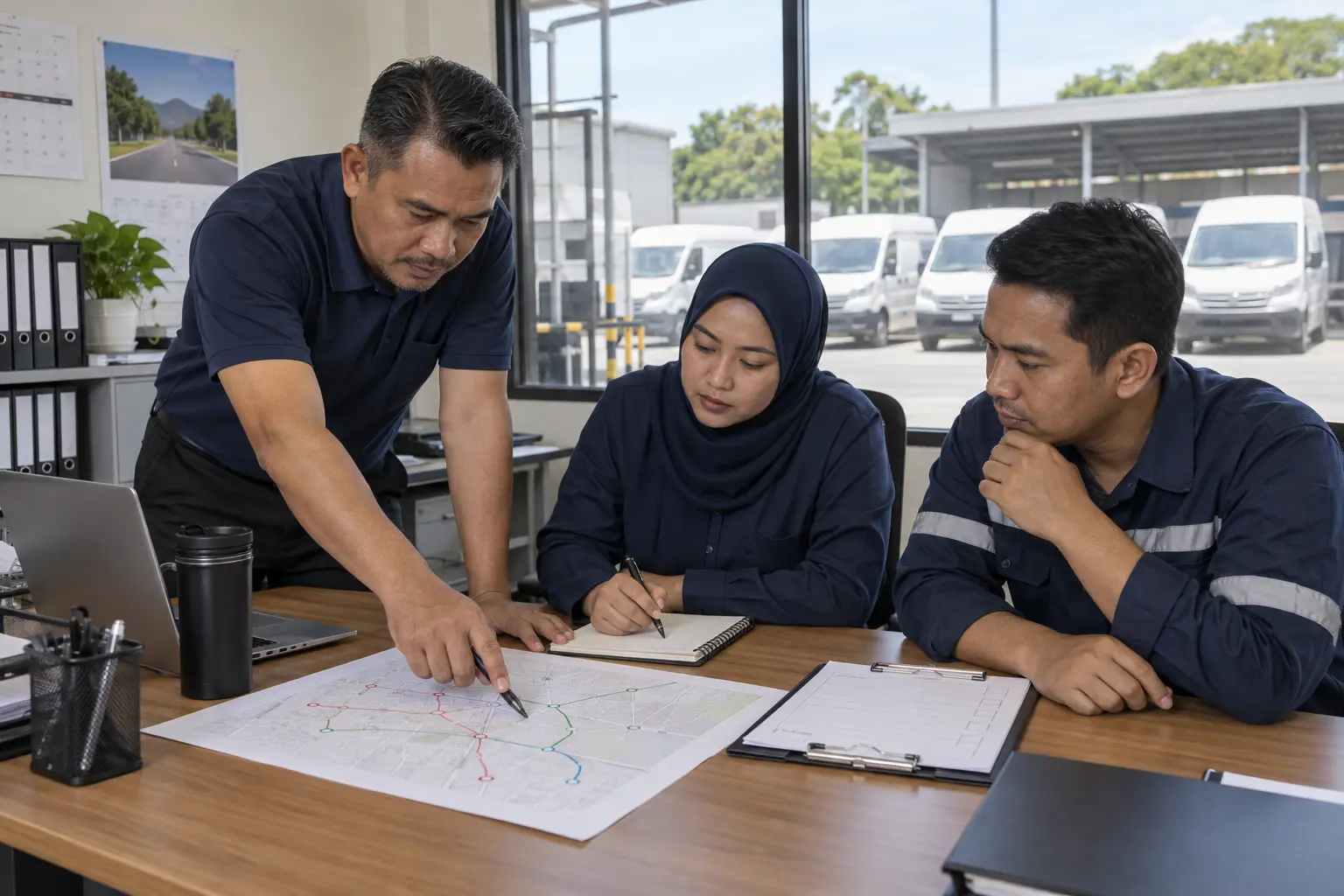
Fleet safety training should prepare employees for the decisions they face on real business journeys—not just help them remember road rules. For Malaysian companies, that includes driving between client appointments, using shared pool cars, transporting colleagues and arriving safely at unfamiliar sites.
A valid driving licence is a starting point. Drivers also need to understand the vehicle, the journey and their company’s expectations when conditions change. This guide focuses on corporate cars and light vehicles; heavy vehicles, specialist equipment and passenger transport operations require additional role-specific instruction.
A practical programme connects safe driving skills with everyday work decisions: whether to start a journey, how to manage a delay, when to report a defect and when to stop. The UK Health and Safety Executive’s work-related road safety guidance uses a useful framework of the journey, driver and vehicle. That framework informs this article as general good practice, not as a statement of Malaysian law.
Employees should recognise when tiredness, illness, stress or other impairment could affect their driving. A demanding working day matters even if the journey itself is short.
Training should explain how to raise a concern before setting off and who can authorise an alternative arrangement. Where medication may affect driving, seek advice from a qualified healthcare professional rather than guessing.
Practice scenario: A late meeting finishes after a full day of site visits. Ask the driver and manager to agree a safe alternative to pushing through the return journey.
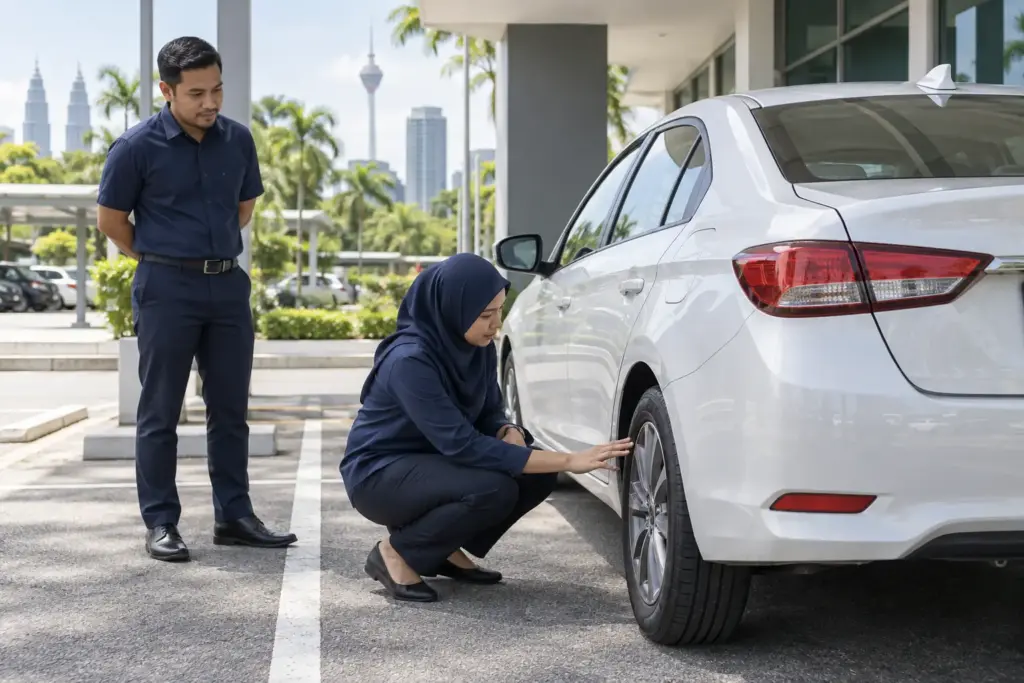
Shared vehicles can introduce unfamiliar controls and unreported defects. Before departure, drivers should follow the company’s vehicle-specific check, including tyres, visible damage, lights, windows, mirrors, warning indicators and seat belts.
Adjust the seat, head restraint and mirrors while parked. Locate the demister, lights, parking brake and other essential controls before entering traffic. For electric or hybrid vehicles, include model-specific charging and operating instructions.
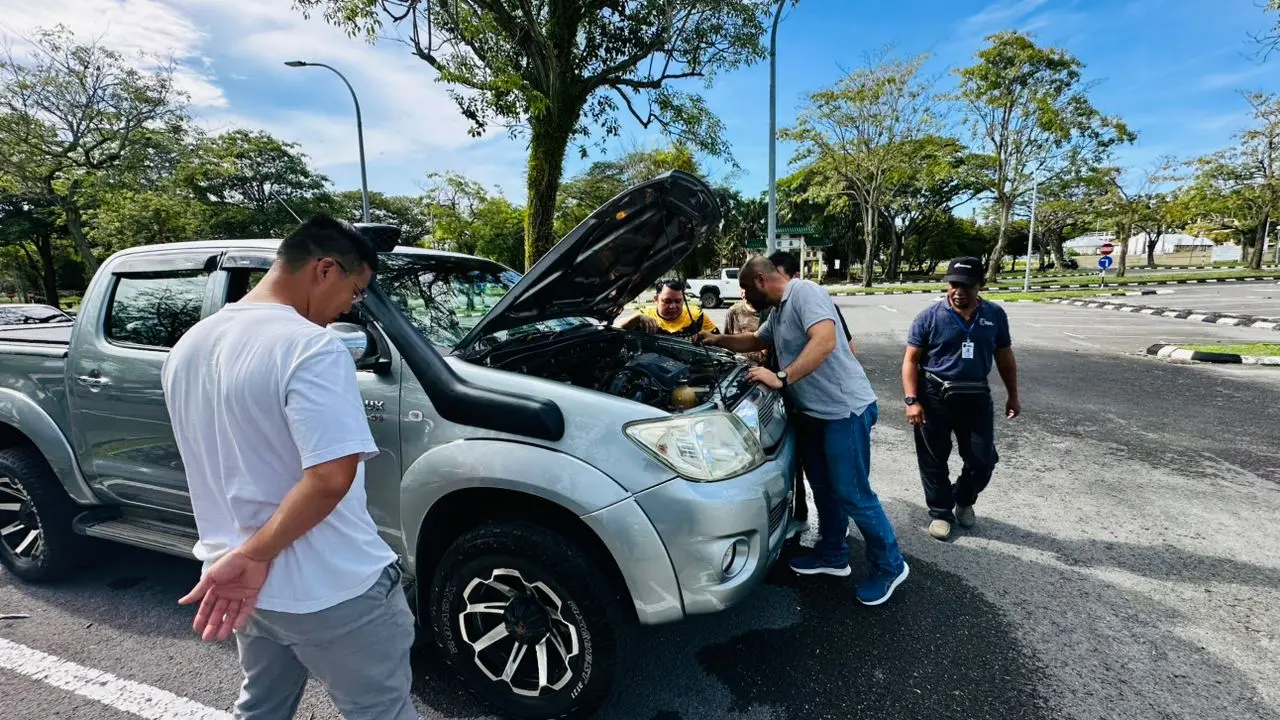
Teach drivers how to report a defect and when the vehicle must remain out of use pending a competent assessment. A handover signature is not a substitute for checking the vehicle.
Corporate drivers need to look beyond the vehicle immediately ahead. Training should develop observation of junctions, pedestrian crossings, parked vehicles, motorcycles and changing traffic patterns.
Use locally relevant scenarios: motorcycles alongside slow traffic, pedestrians near an office entrance, a vehicle emerging from a side road or a queue hidden beyond a bend. The aim is early recognition and a calm response, not a last-second manoeuvre.
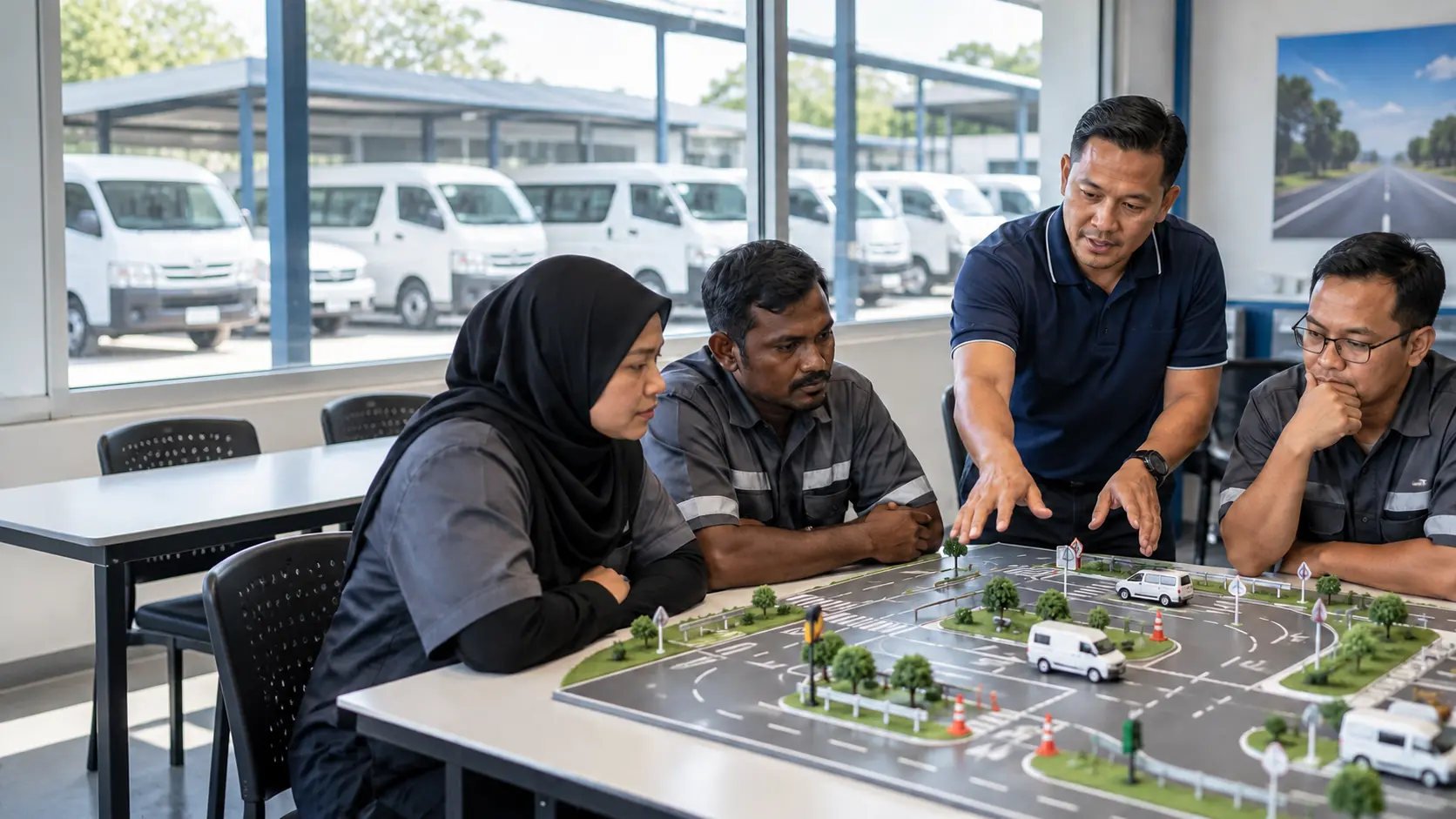
Practice scenario: Show a road scene and ask drivers to identify what could change next, where visibility is limited and what extra space would help.
A posted speed limit is not a target for every situation. Drivers should adapt to visibility, traffic, road surface and the vehicle they are using, while observing applicable limits.
Teach a time-based method of assessing following distance and explain why more space is needed when conditions deteriorate. Avoid presenting one gap as safe for every speed, load or weather condition.
In heavy rain, reduce speed smoothly, increase space and use the appropriate lights. Do not enter floodwater of unknown depth. Training should also cover choosing a safe place to stop if visibility or conditions make continuing unsafe.
Messages from a manager or customer can create pressure to respond while driving. Set expectations before the journey: navigation and communications should be organised while safely parked, and drivers should not read messages or handle a phone while driving.
Hands-free communication can still distract. The company’s policy should explain when calls must wait and how employees can stop safely before dealing with work requests.
Practice scenario: A customer changes the destination mid-journey. The safe response is to find a suitable parking place before reviewing the message and updating the route.
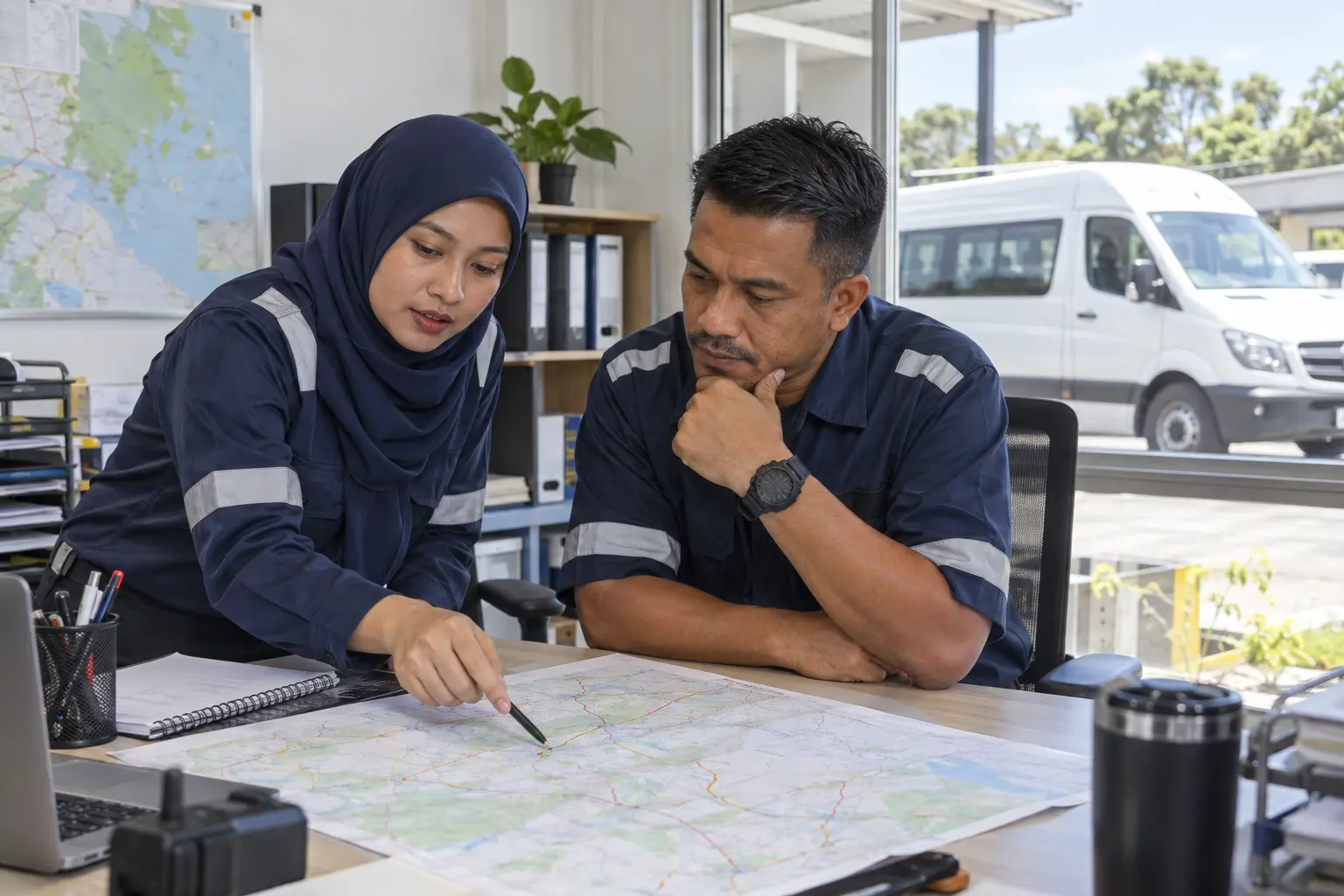
Plan more than the appointment time. Include the route, likely traffic, rest opportunities, parking, site access and the return journey. Decide whether travel is necessary or whether the meeting can be handled remotely.
HSE’s journey-planning guidance recommends considering schedules, weather, time on the road and time needed for customer-facing tasks. Employers can use these principles when designing their own travel procedures.
Drivers should know that a delay is something to communicate safely, not something to recover through speeding. Managers must support that message in the schedules they approve.

Low-speed manoeuvres deserve training attention. Office car parks and client premises may combine tight spaces, pillars, pedestrians and unfamiliar traffic arrangements.
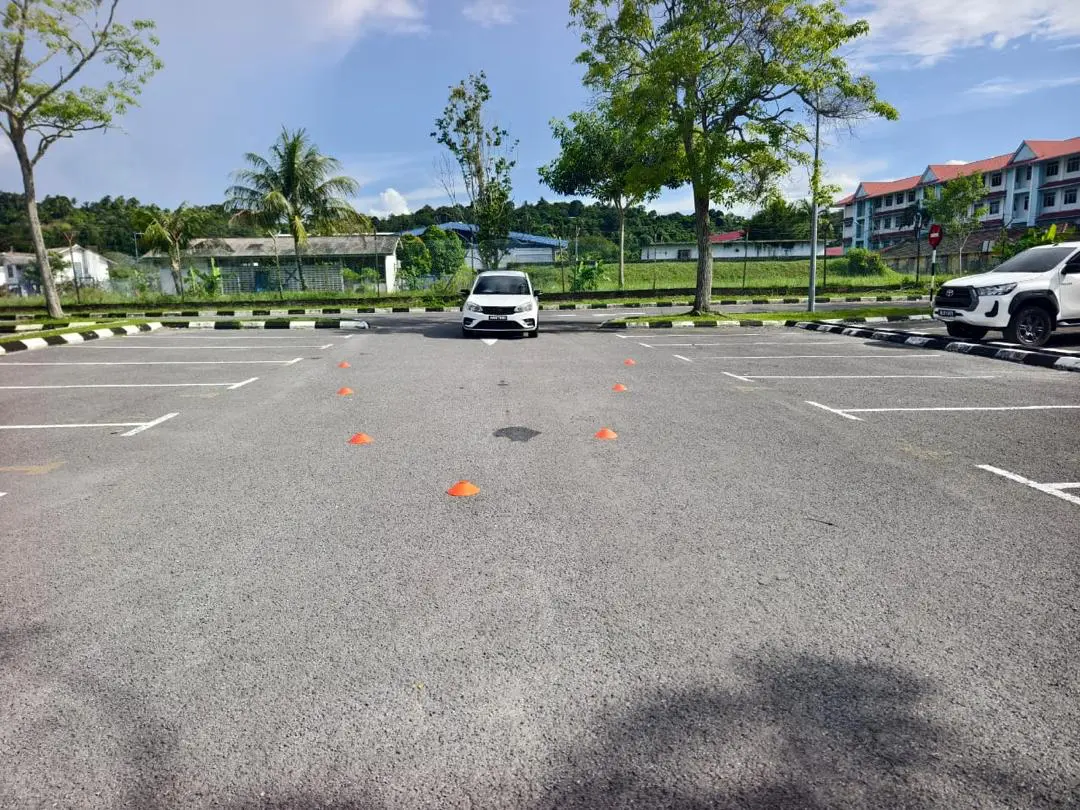
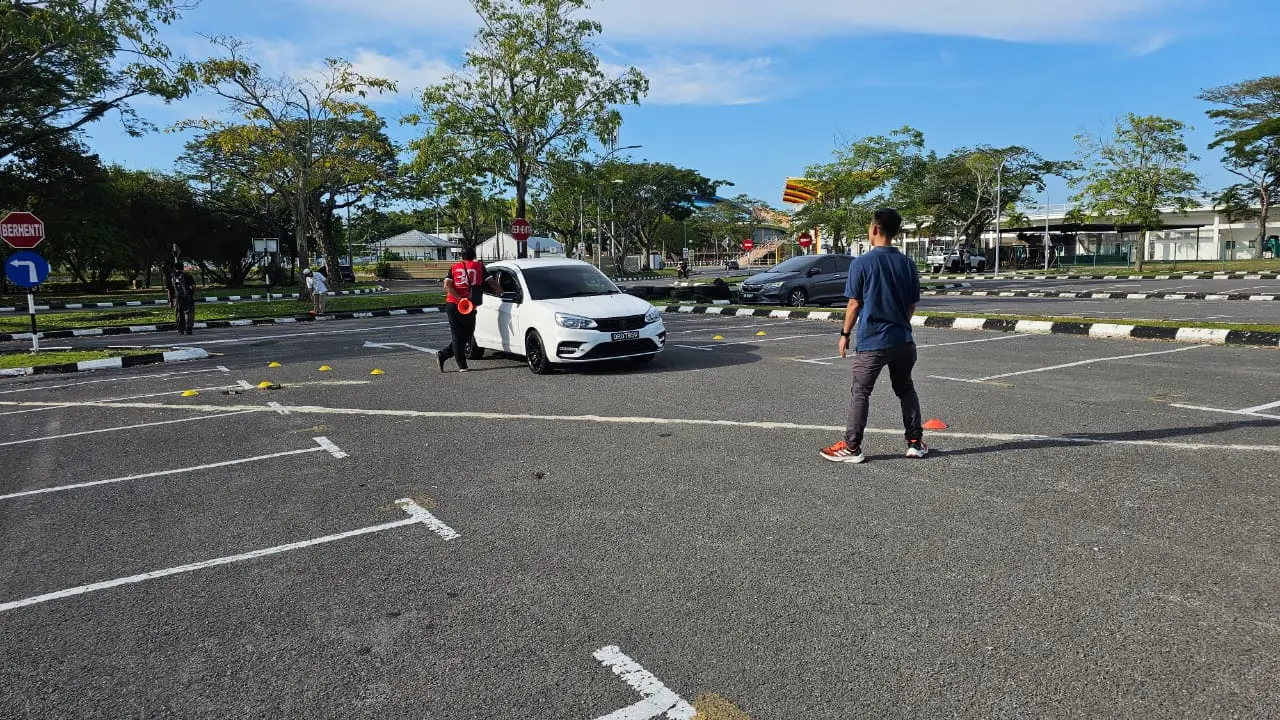
Choose a suitable bay, assess the surroundings and minimise reversing where practical. Use mirrors, direct observation and fitted assistance systems together; cameras and sensors do not replace checking. Stop if the manoeuvre is uncertain.
Drivers should also confirm that passengers are seated and belted before moving, secure loose equipment and choose a safe place for boarding or alighting. Passenger requests must not override safe driving decisions.
Drivers need a clear company procedure for getting help. Training should cover emergency contacts, vehicle assistance, reporting responsibilities and the information to record when it is safe to do so.
Protect people before collecting photographs or completing forms. Do not stand in a live traffic lane to document damage. Follow emergency-service instructions and applicable local reporting requirements.
Include near misses, not just collisions. A repeated visibility problem at a customer entrance may call for a different parking arrangement or site discussion, rather than another reminder to “be careful”.
Use the topic list as a starting point, then adapt it to your vehicles, routes and incident history. It is a planning guide, not an accredited syllabus or a claim that every topic is included in a standard ADHINS package.
Measure more than attendance. Can the driver recognise a defect, explain when a journey should be postponed and demonstrate a safe parking routine? Pair individual coaching with management action on unrealistic schedules and poorly maintained vehicles.
Consider anyone who drives on company business, including employees who only travel occasionally. Determine the training scope from their actual vehicle, journey and responsibilities rather than their job title alone.
Defensive driving is an important component. A broader fleet programme also addresses vehicle checks, journey arrangements, company procedures, passenger safety and reporting.
Set a review schedule based on risk and competence. Changes in duties, vehicles, incidents or observed behaviour may justify an earlier refresher. There is no single interval recommended here for every corporate fleet.
A shared core can explain company expectations, but practical instruction should reflect the vehicles and tasks involved. Occasional pool-car users and specialist commercial drivers may need different modules.
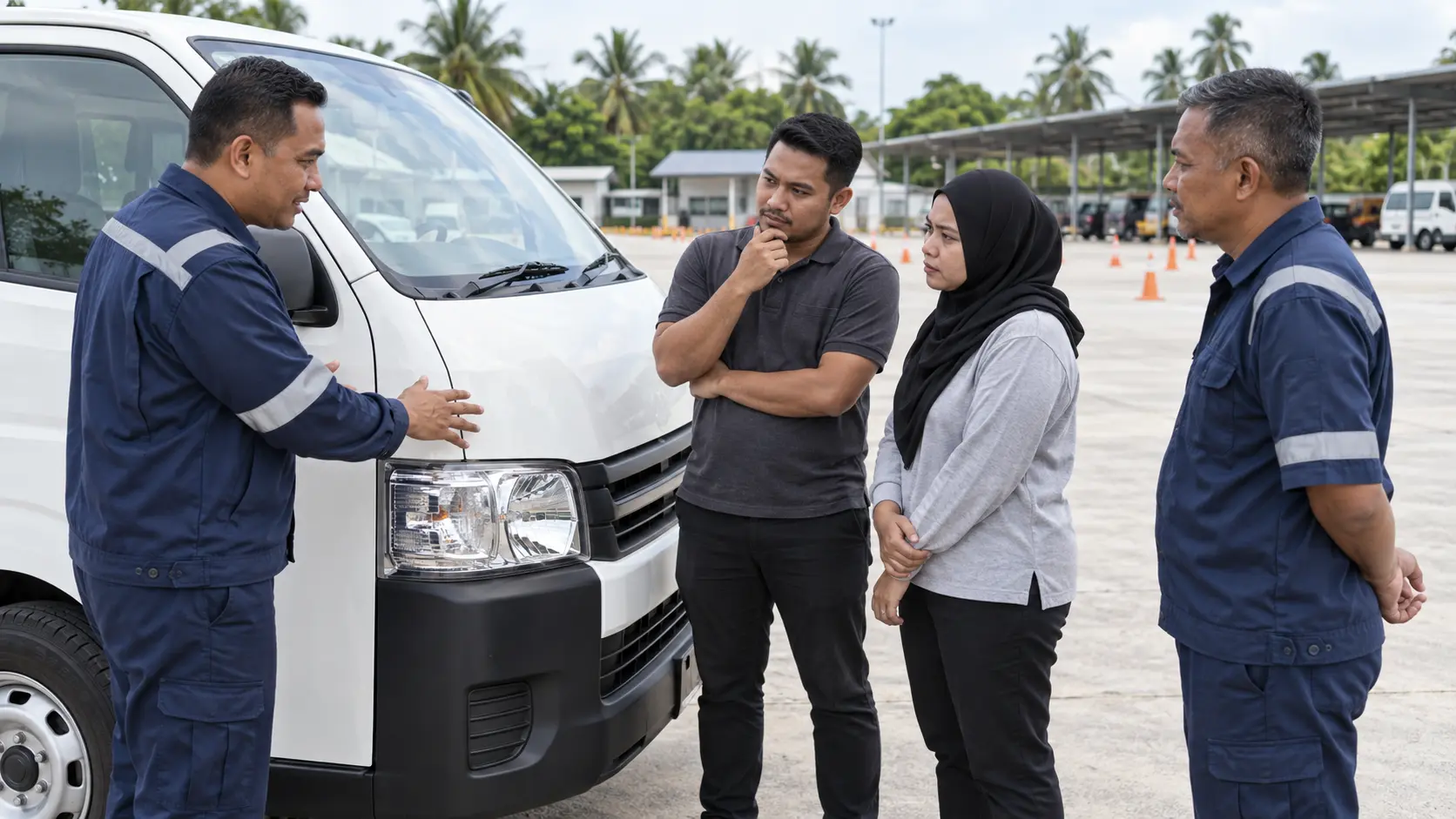
Discuss your company’s training needs with ADHINS, including vehicles, business journeys and driver responsibilities. Request a proposed training scope that connects defensive driving with the practical decisions your employees face at work.
Before booking, confirm the programme content, practical arrangements and assessment approach. Training supports safer operations, but it does not guarantee accident prevention or regulatory compliance.






©2026 ADHINS Management Sdn Bhd. All Rights Reserved.