
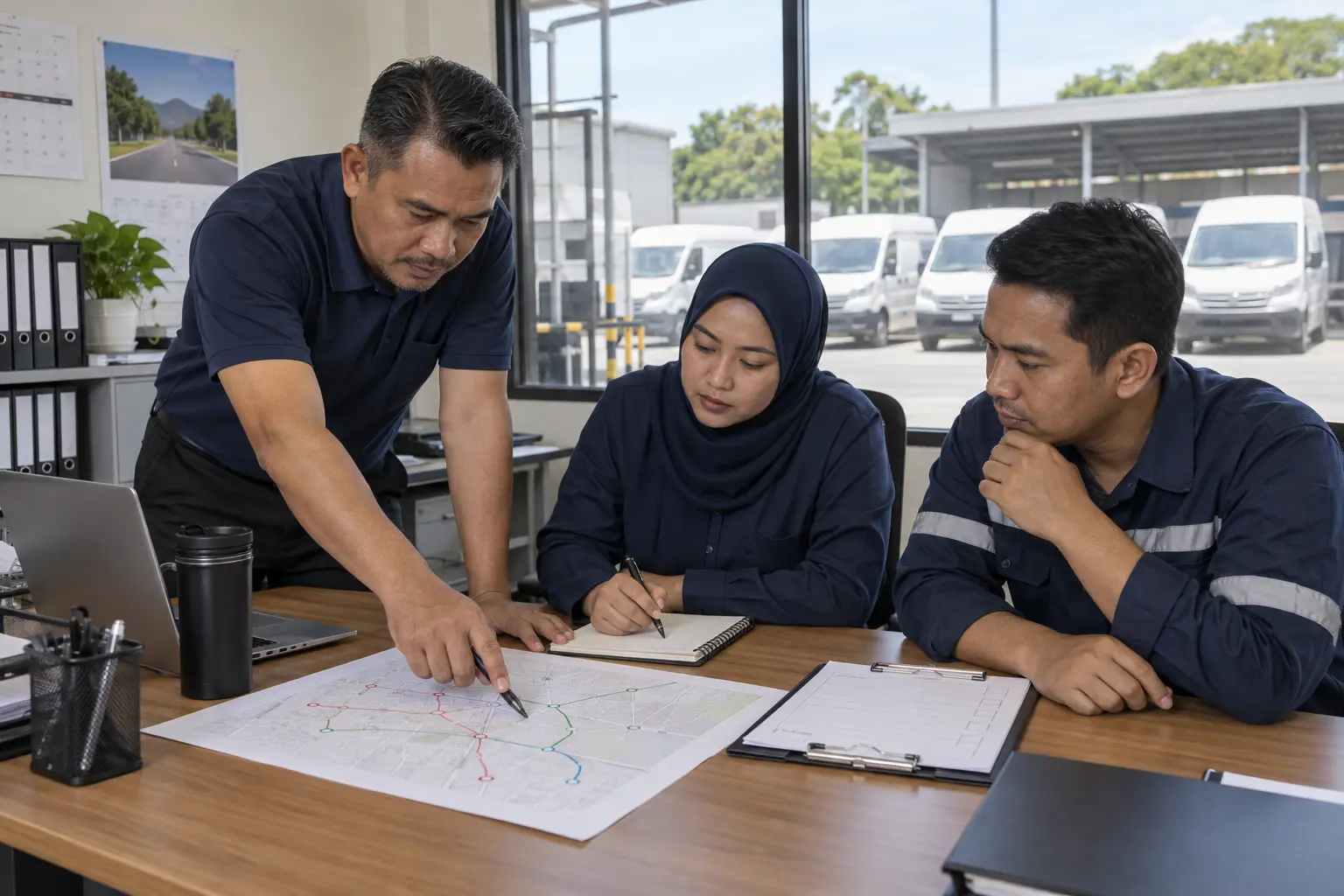
A journey management plan turns a business trip into a set of clear decisions: who will drive, which route is suitable, when to rest, who will monitor progress and what happens if conditions change. It should help drivers and managers make safer choices—not simply record a destination and expected arrival time.
For Malaysian companies, the plan may cover client visits, inter-branch travel, deliveries or journeys to unfamiliar sites. The approach below is a practical starting point that should be adapted to your vehicles, workforce and operating risks.
A journey management plan is a trip-specific record of the arrangements and controls needed before, during and after a work journey. It sits beneath the company’s wider road safety policy: the policy sets expectations, while the plan explains how those expectations apply to this trip.
Keep the detail proportionate. A familiar local visit may use a brief checklist linked to an approved route. A remote, overnight or unfamiliar journey may need a fuller review and explicit approval.
The UK Health and Safety Executive’s journey-planning guidance highlights route suitability, realistic schedules, rest opportunities and conditions at the destination. These are useful general principles; UK legal requirements are not presented here as Malaysian rules.
Start with the business need. Can the task be completed remotely, combined with another visit or assigned to someone closer to the destination? If travel is necessary, record the origin, destination, intended stops and return arrangements.
Define which journeys require additional review. Your company might flag unfamiliar routes, isolated sites, night travel or a long return trip after demanding work. These are suggested review triggers, not universal legal classifications.
Name the driver and the person responsible for coordinating the journey. Include passengers and any equipment or load that affects vehicle choice.
Confirm that the driver is authorised by the company and has the appropriate licence and competence for the vehicle and task. Discuss fitness for the journey, including the work already completed that day. Do not treat an employee’s willingness to drive as proof that the trip is safe.
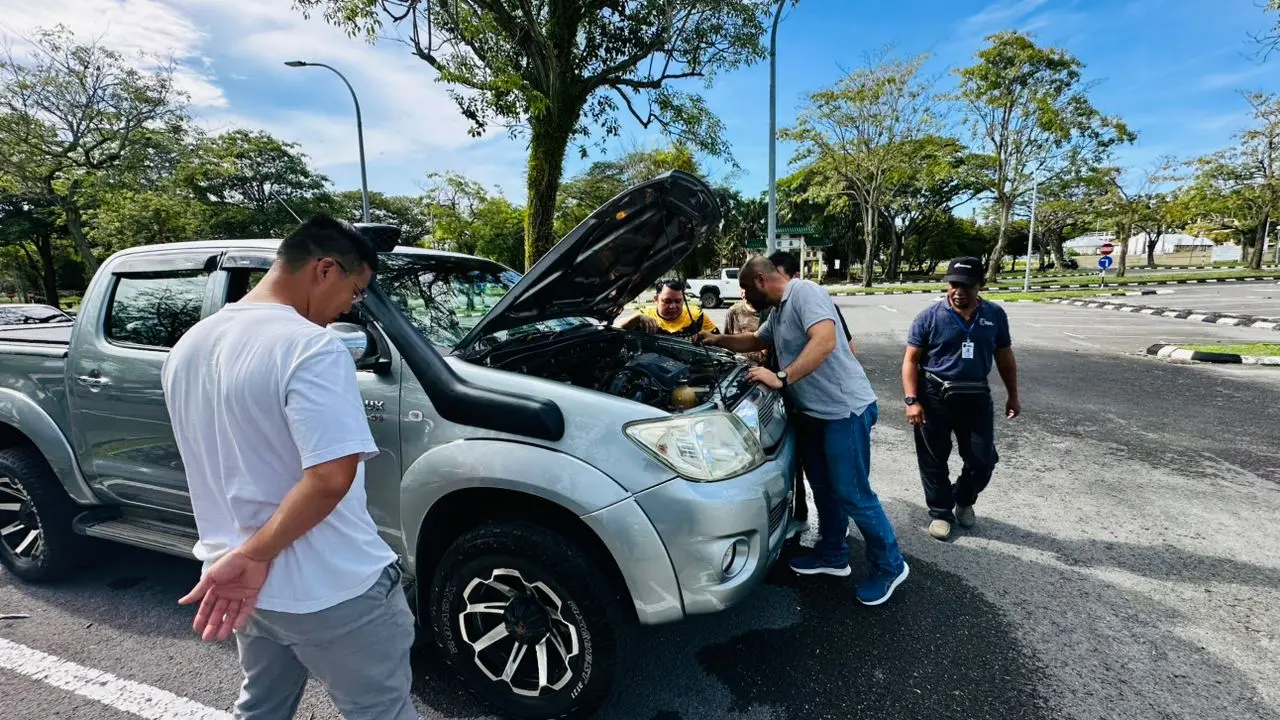
Use a vehicle-specific pre-trip inspection and record its outcome. Check that any reported defect has been dealt with by the appropriate person before release. Include sufficient fuel or charge, suitable tyres, visibility, restraints and secure storage for equipment.
The plan should state who can withdraw a vehicle or arrange a replacement. Drivers should not be expected to diagnose a safety-critical defect themselves or continue simply because an appointment is booked.
Review the proposed route for vehicle suitability and access constraints. Confirm the correct entrance, parking or unloading area, site contact and any induction requirements with the destination.
For Malaysia-specific checks, consult MET Malaysia for current weather information and Public InfoBanjir for available flood information. Follow road closures and instructions from the relevant authorities or road operator. A map application or an absence of alerts does not establish that a road is safe.
Separate travel time from time spent on site. Add parking, access procedures, work tasks and planned stops rather than copying the fastest navigation estimate into the appointment calendar.
Choose rest arrangements based on the journey, driver, work pattern and applicable requirements. No single break schedule is prescribed in this guide. Planned breaks must not become a reason to continue when the driver needs to stop earlier.
Consider what happens if the site visit overruns. A later return may require rescheduling, another authorised driver or an overnight stay. Assign someone with authority to approve the alternative.

A plan needs a real contact person, not just a phone number that nobody monitors. Name a primary coordinator and backup, and confirm their availability for the full journey.
Choose check-in points appropriate to the risk, such as departure, a planned stop and arrival. Drivers should communicate only when safely parked. Do not require them to answer calls or type updates while driving.
Write down a risk-appropriate overdue threshold and escalation sequence before departure. For example, the coordinator can review the last confirmed update, check with the destination, attempt contact under the agreed safe-contact procedure and escalate to the nominated manager. If there is evidence of immediate danger, use emergency arrangements without waiting for an administrative threshold.
Do not rely solely on tracking software: a location signal does not confirm the driver’s welfare. Explain any monitoring arrangements to drivers and limit access to journey information to those who need it.
State clearly that drivers can stop in a safe location when continuing becomes unsafe. Examples include a vehicle concern, severe fatigue, an unavailable route or deteriorating visibility. No driver should be pressured to recover lost time through unsafe driving.
Agree which changes need coordination before the trip resumes. A route diversion, additional passenger, new destination or extended workday may change the original risk assessment.
Record the revised arrangement and who accepted it. Manager approval does not make an unsafe condition acceptable; it should confirm that a workable alternative has been arranged.
Include the company’s emergency procedure, roadside assistance details, destination contact and a way to describe the vehicle’s location. Make essential contacts available if the driver cannot access the usual work app.
Drivers should prioritise personal safety, avoid exposure to moving traffic and follow emergency-service or road-operator instructions. Do not make photographs, vehicle recovery or paperwork the first priority.
For remote or higher-risk travel, decide in advance what support is realistically available. A contact list is not sufficient if there is no agreed response when a driver cannot be reached.
Confirm arrival or the agreed end of the journey so the coordinator knows monitoring can stop. Record unexpected delays, route changes, defects, near misses and any support required.
Review patterns rather than merely filing the form. If the same appointment repeatedly overruns, adjust the schedule. If drivers report an unsafe site entrance, discuss access arrangements with the customer.

Copy these fields into your company form. The suggested owners below can be adapted to your organisation. This is an editorial template, not an official regulatory form.
| Section | What to record | Suggested owner |
|---|---|---|
| Trip details | Purpose, date, origin, stops, destination and return arrangements | Requester |
| People and vehicle | Driver, passengers, vehicle ID, authorisation and inspection outcome | Driver and fleet coordinator |
| Route review | Route, access restrictions, weather check, alternatives and site contact | Driver and coordinator |
| Schedule | Departure, appointment, rest locations, expected arrival and contingency | Coordinator |
| Communication | Primary and backup contacts, safe check-ins and overdue threshold | Coordinator |
| Exceptions | Stop triggers, change approval and emergency arrangements | Approving manager |
| Release and closure | Decision, outstanding actions, approval where required, arrival and lessons | Manager and driver |
A company driver is scheduled to take a colleague to an unfamiliar branch and return the same day. The plan identifies the correct entrance, a rest location and an arrival contact. It also names a manager who can change the return arrangement.
When the meeting overruns, the driver updates the coordinator while parked. They review the return journey and the driver’s readiness instead of treating the original return time as fixed. The revised decision is recorded and the destination is informed where necessary.
This example shows the purpose of the plan: a usable decision process when the day does not go as expected.
No. Use a proportionate process, with more detail for higher-risk or unfamiliar travel. A short routine-trip record can reference established controls, provided someone checks whether conditions have changed.
Assign an authorised person who understands the journey risks and can arrange alternatives. Driver input is essential, but the driver should not carry all responsibility for scheduling and resources.
No. Navigation does not cover driver fitness, vehicle readiness, safe check-ins, approval responsibilities or the response to an overdue arrival.
Review it before departure and whenever a material change affects the journey. Repeated delays, incidents and driver feedback should also inform future plans.
Contact ADHINS to discuss your routes, driver responsibilities and transport safety concerns. Bring an existing trip form or a typical journey example so the discussion can focus on the decisions your team needs to manage.
A journey plan should complement driver training, vehicle maintenance and management oversight. This guide is general planning information, not legal advice or a guarantee of accident prevention or regulatory compliance.






©2026 ADHINS Management Sdn Bhd. All Rights Reserved.