Hazard perception is the ability to notice a road situation, recognise how it could develop and choose an appropriate response before it becomes urgent. For fleet drivers, it connects observation with judgement: seeing a parked vehicle is different from recognising the clues that it may move into the road.
Better anticipation can give drivers more opportunity to adjust speed, maintain space or wait. It cannot remove every risk or guarantee an incident-free journey. This guide explains how Malaysian companies can develop and review the skill through relevant scenarios, practical coaching and supportive work arrangements.
Hazard perception turns clues into decisions
GOV.UK’s hazard-perception guidance describes a developing hazard as something that would require a driving response, such as a change in speed or direction. Its example distinguishes a stationary parked car from one beginning to move out. See the official explanation of developing hazards. This is a conceptual reference, not a description of Malaysian licensing requirements.
On a work journey, the skill involves three connected questions: what can I see, what might change, and what safe response is available? Drivers should not wait for certainty that another road user will enter their path before preparing for a plausible conflict.
Preparation is not a licence to make sudden or speculative manoeuvres. The response must account for surrounding traffic, road rules, vehicle capabilities and the actual situation.
Recognise the difference between a clue and an immediate threat
A clue suggests something worth monitoring. A developing hazard changes the decisions the driver needs to make. An immediate threat may demand a prompt response, leaving fewer options. The aim of training is to connect earlier clues with a proportionate action.
| Situation | Clue to notice | Decision to discuss |
|---|---|---|
| Parked vehicle near the lane | Occupant activity, an indicator or vehicle movement. | Manage speed and space; do not assume it will remain stationary. |
| Junction with restricted view | Vehicles or roadside objects obscure the entrance. | Approach with time to respond rather than relying on an apparently empty road. |
| Traffic queue ahead | Brake lights or traffic compressing beyond the vehicle in front. | Adjust early while checking surrounding traffic. |
| Pedestrian near parked vehicles | Movement toward the kerb or an obscured crossing opportunity. | Anticipate a possible crossing and avoid assuming the person has seen you. |
These are discussion examples, not fixed instructions for every encounter. A trainer should ask which details affect the response and what information remains uncertain.
Look beyond the vehicle directly ahead
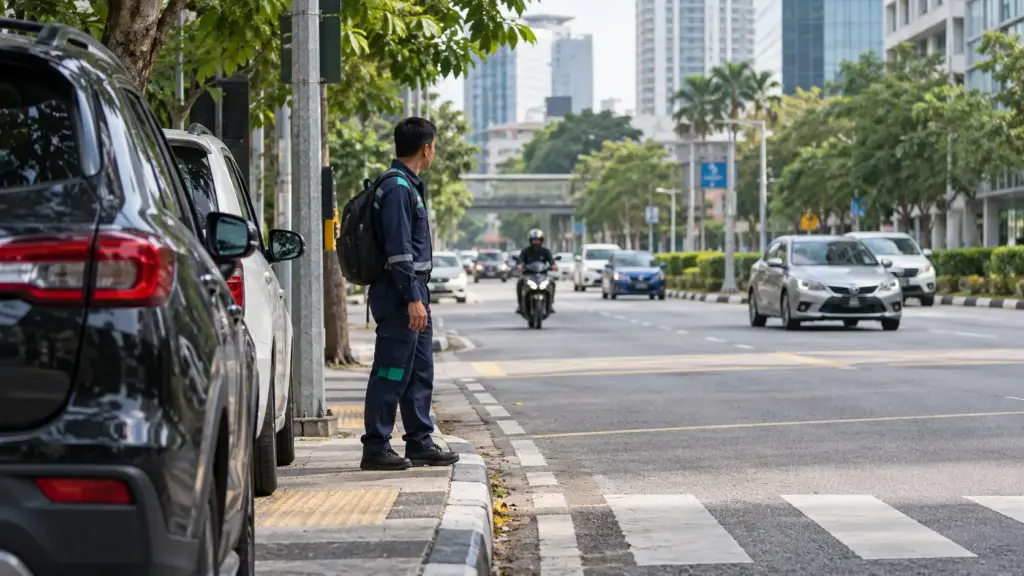
Focusing only on the nearest vehicle can hide the reason traffic is slowing. Encourage drivers to look farther along the road where visibility allows, while continuing to monitor nearby road users, mirrors and relevant side areas.
A useful observation routine should match the vehicle and situation, not impose a rigid sequence that draws attention away from a changing hazard. Drivers need to understand their visibility limits and avoid lingering on one object.
For larger vehicles, unfamiliar controls, dimensions and blind areas require vehicle-specific instruction. General hazard discussion does not establish competence to drive a different vehicle type.
Use time and space to keep options available
Noticing a clue helps only if the driver has room to respond. Speed and following margins should reflect conditions, visibility, vehicle characteristics and the possibility that traffic ahead may change.
For example, seeing brake lights farther ahead creates an opportunity to adjust before the nearest vehicle brakes. In contrast, following too closely may turn the same observation into a late, urgent reaction.
Do not present one following-distance figure as sufficient for every vehicle and condition. Drivers should apply appropriate training and applicable rules, increasing their margin when conditions require it. Any steering or lane change must be safe in relation to other road users, not merely an escape from the first hazard noticed.
Practise with familiar work scenarios
Use scenarios from the routes and sites drivers actually visit. An urban company-car driver may need to discuss pedestrians, motorcycles and parked vehicles; a delivery driver may face restricted entrances and changing unloading arrangements.
For a classroom or video exercise, pause before the situation becomes obvious. Ask participants to identify the clue, explain what might happen and name an appropriate response. Then compare their reasoning as the scene develops.
- What first drew your attention?
- Which area is hidden or uncertain?
- What could another road user do next?
- What action gives you time without creating another conflict?
- What would change your decision?
Use authorised training material and handle any real journey footage appropriately. Drivers must not watch clips, operate devices or complete a quiz while driving. Do not stage dangerous encounters on public roads for training.
Assess the reasoning as well as recognition
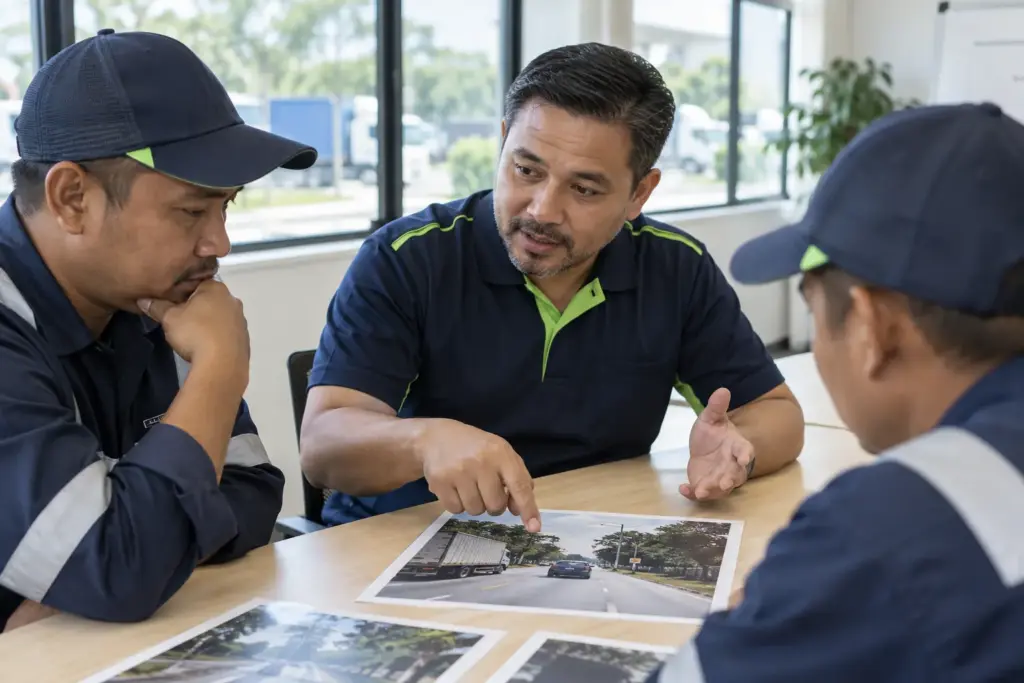
A participant may identify every visible object yet miss how one could affect the journey. Another may notice the right clue but propose a response that creates a new risk. Assessment should consider both parts.
Agree learning outcomes and criteria before training. Useful evidence includes recognising relevant clues, explaining uncertainty and selecting a proportionate response. Keep any score tied to the exercise it measures; it is not proof of safe performance across every route.
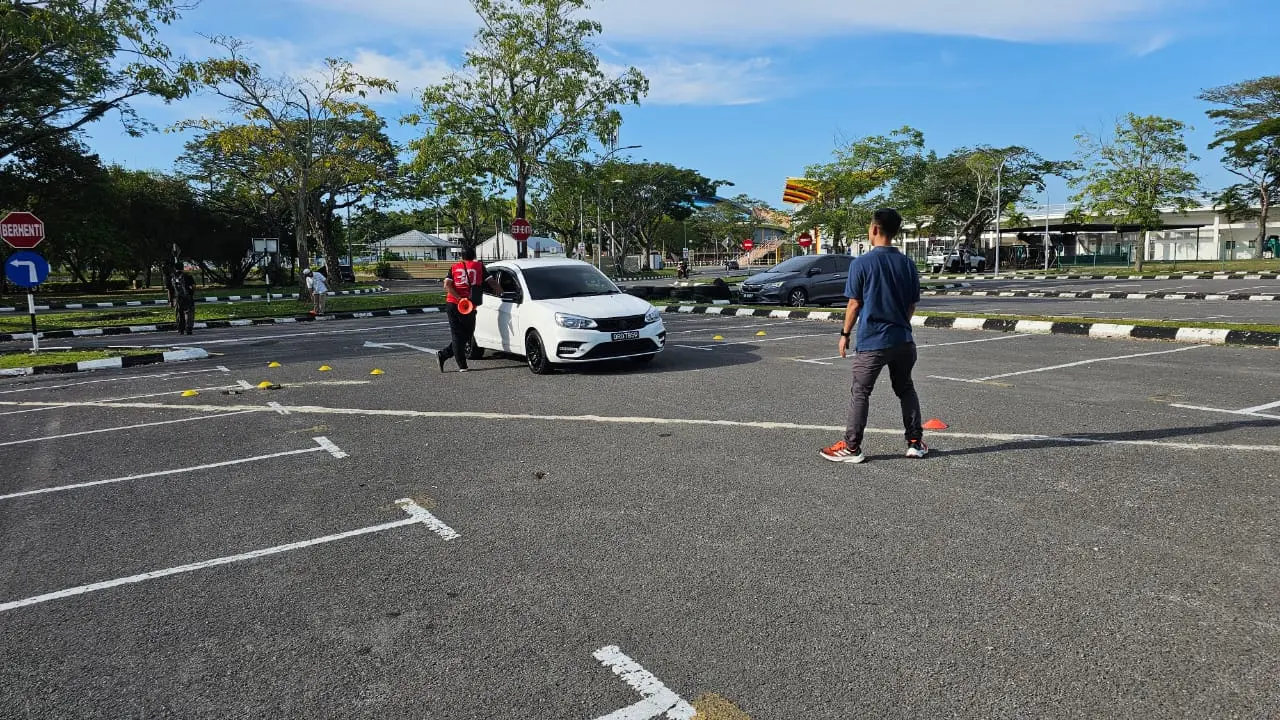
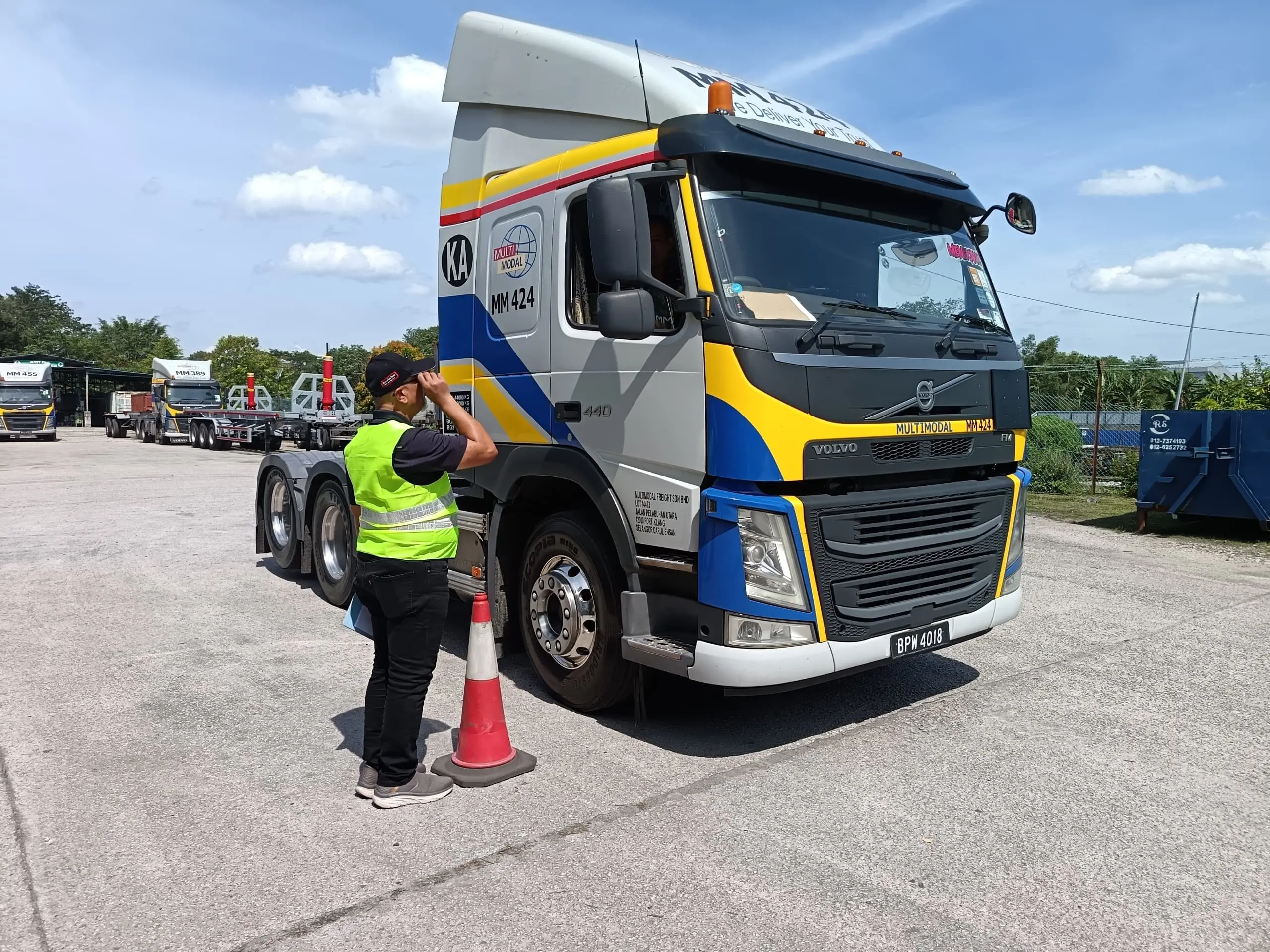
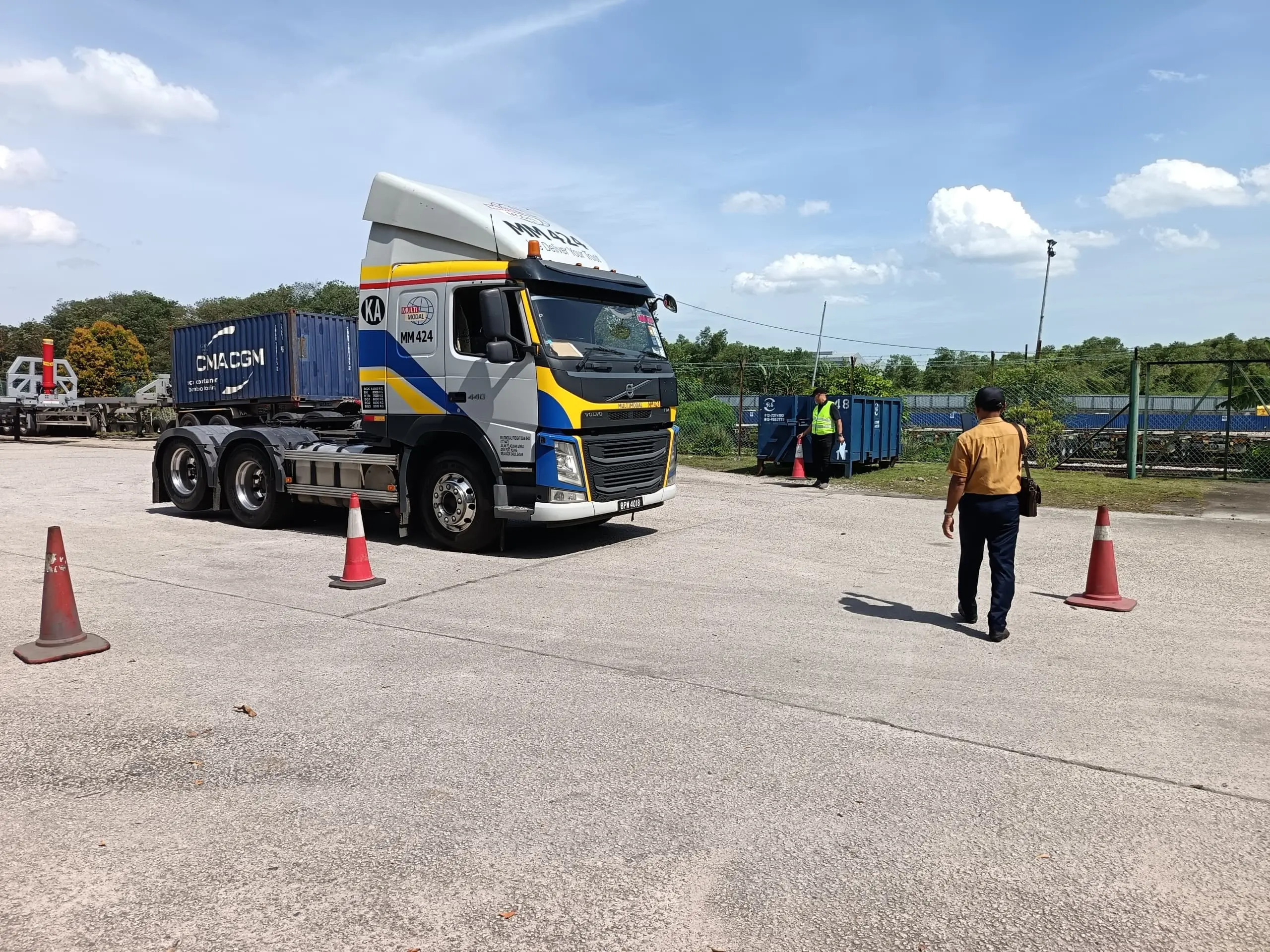
Where an on-road observation is appropriate, use a competent observer, a suitable vehicle and a planned authorised route. Avoid demanding running commentary during complex traffic if it distracts the driver. Discuss decisions once it is safe.
Record specific examples and agree targeted follow-up. “Needs better awareness” is less useful than identifying that the driver noticed a queue only after the nearest vehicle braked and agreeing how earlier observation will be practised.
Make the working conditions support anticipation
Fatigue, distraction and pressure to recover delays can undermine the opportunity to observe and decide. Managers should review the complete workday, safe-contact expectations and scheduling alongside driver training.
Dispatchers should not expect drivers to read messages or answer work calls while driving. Supervisors need authority to revise a journey when a driver reports an unsafe condition. Training loses credibility if stopping safely is followed by pressure to continue unchanged.
If fleet data flags abrupt braking, review the context before assigning fault. It may reflect late anticipation, another road user’s action or an appropriate response to danger. A target to eliminate every braking alert could encourage the wrong behaviour.
Review progress without promising a safety outcome
Start with a few relevant behaviours and check them through suitable observation, driver discussion and verified follow-up. Include management actions such as clearer destination access or revised schedules when they affect the same concern.
Incident counts alone cannot show that a skill improved. Exposure, reporting and route conditions vary. Review patterns over time, keep data limitations visible and revisit training when vehicles, routes or duties change.
This article focuses on developing and assessing anticipation. A broader hazard checklist, vehicle maintenance and journey planning remain important companions; none is replaced by a successful scenario exercise.
Frequently asked questions
Is hazard perception the same as quick reactions?
No. It includes recognising how a situation may develop before a response becomes urgent. Reaction remains important, but anticipation aims to preserve more time and options.
Can experienced drivers benefit from this training?
Yes, relevant scenarios and feedback can help review established habits or prepare for changed routes and vehicles. Experience should not be assumed to eliminate assessment needs.
Can a video-test score prove a driver is safe?
No. It records performance in that exercise. Real work also involves vehicle handling, conditions, fatigue, distraction and operational decisions.
How should companies follow up after training?
Agree a small number of observable priorities, provide suitable coaching and check whether actions are applied. Address working conditions that make the safe response difficult.
Discuss practical driver development with ADHINS
Bring your vehicle types, route examples and recurring concerns to the conversation. Contact ADHINS about defensive driving training and fleet safety support, and ask how the proposed scope can develop hazard recognition, practical decisions and follow-up.